
Last updated October 15, 2026
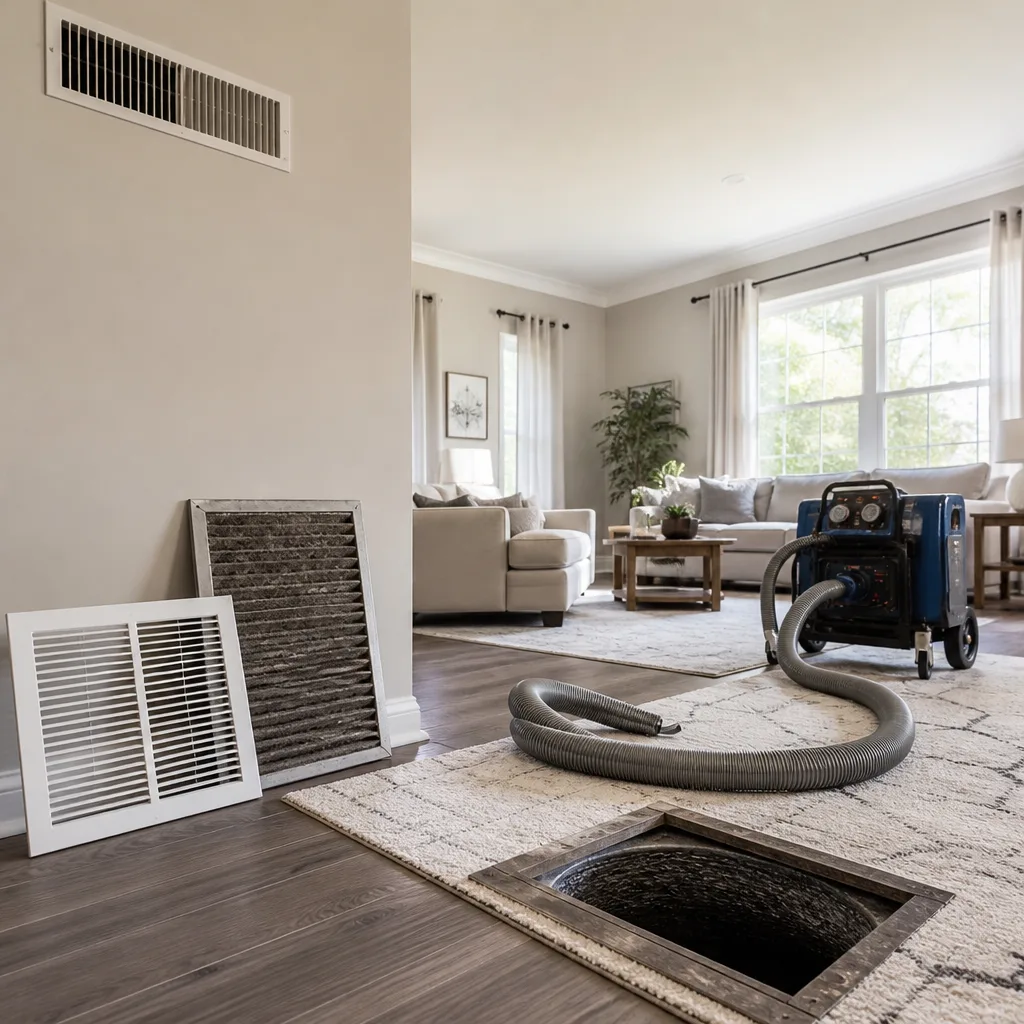 Whole-home duct cleaning
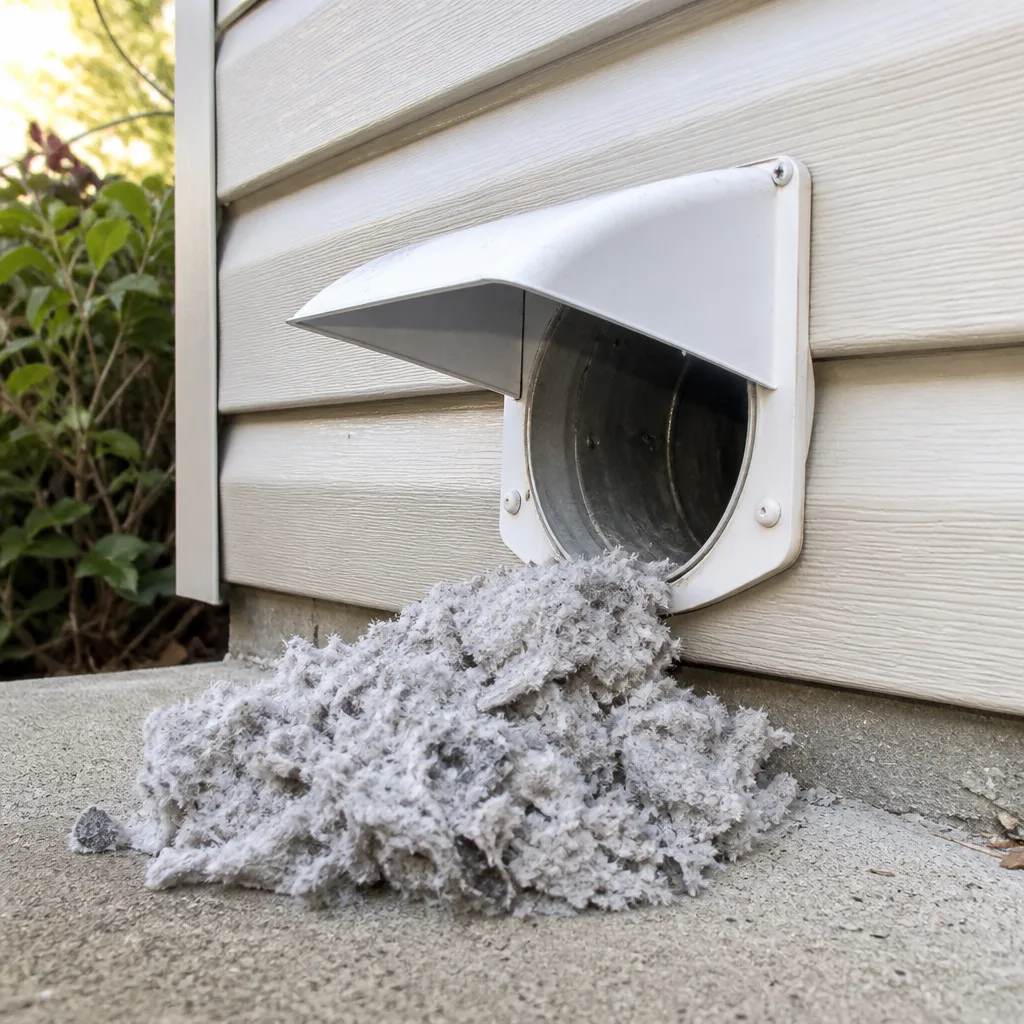 Dryer vent cleaning
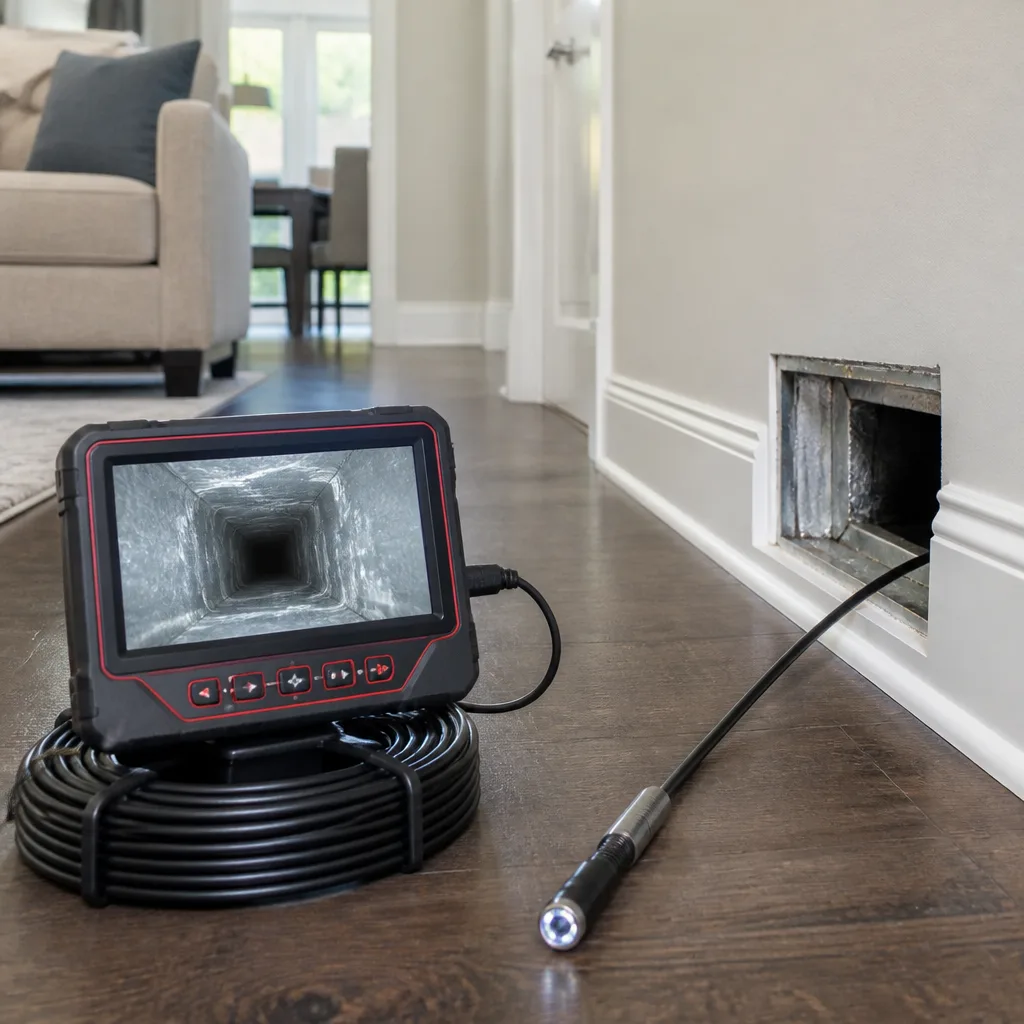 Camera inspection
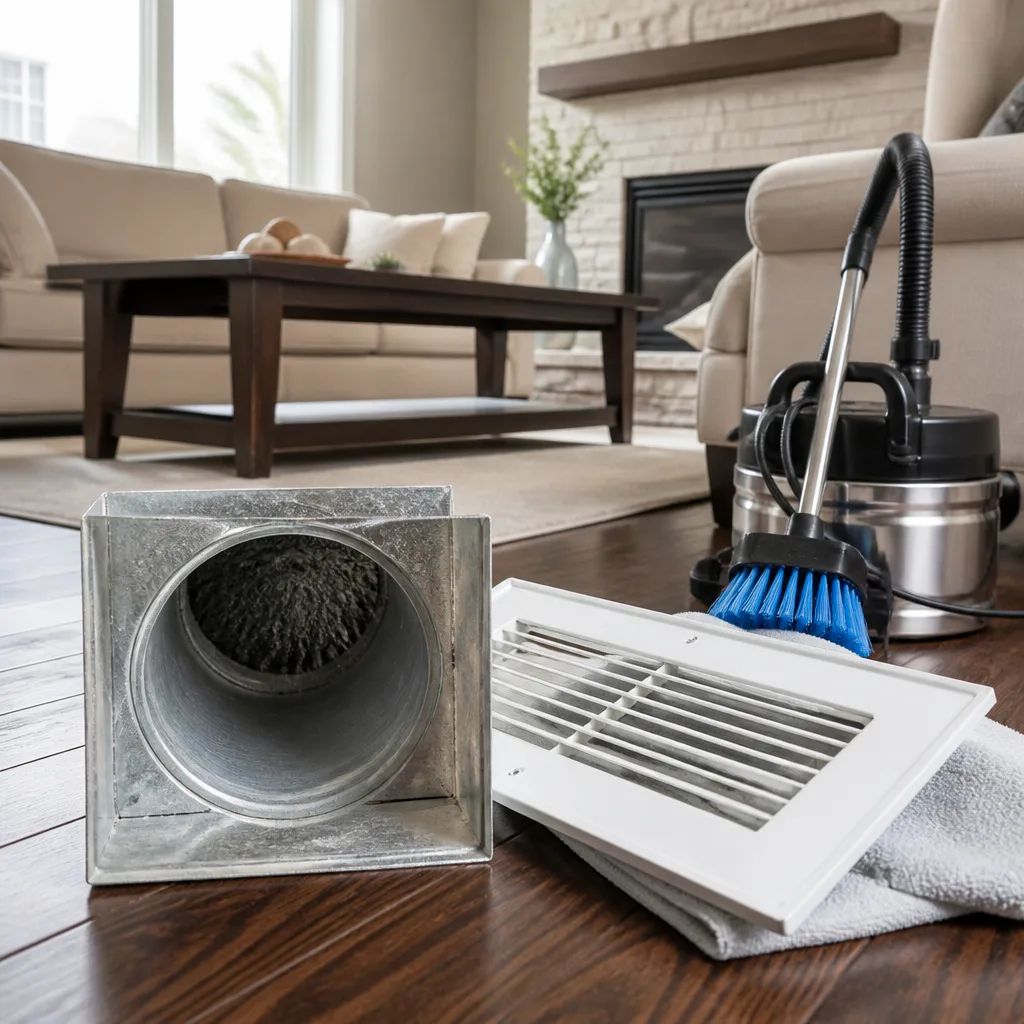 Sanitizing & deodorizing
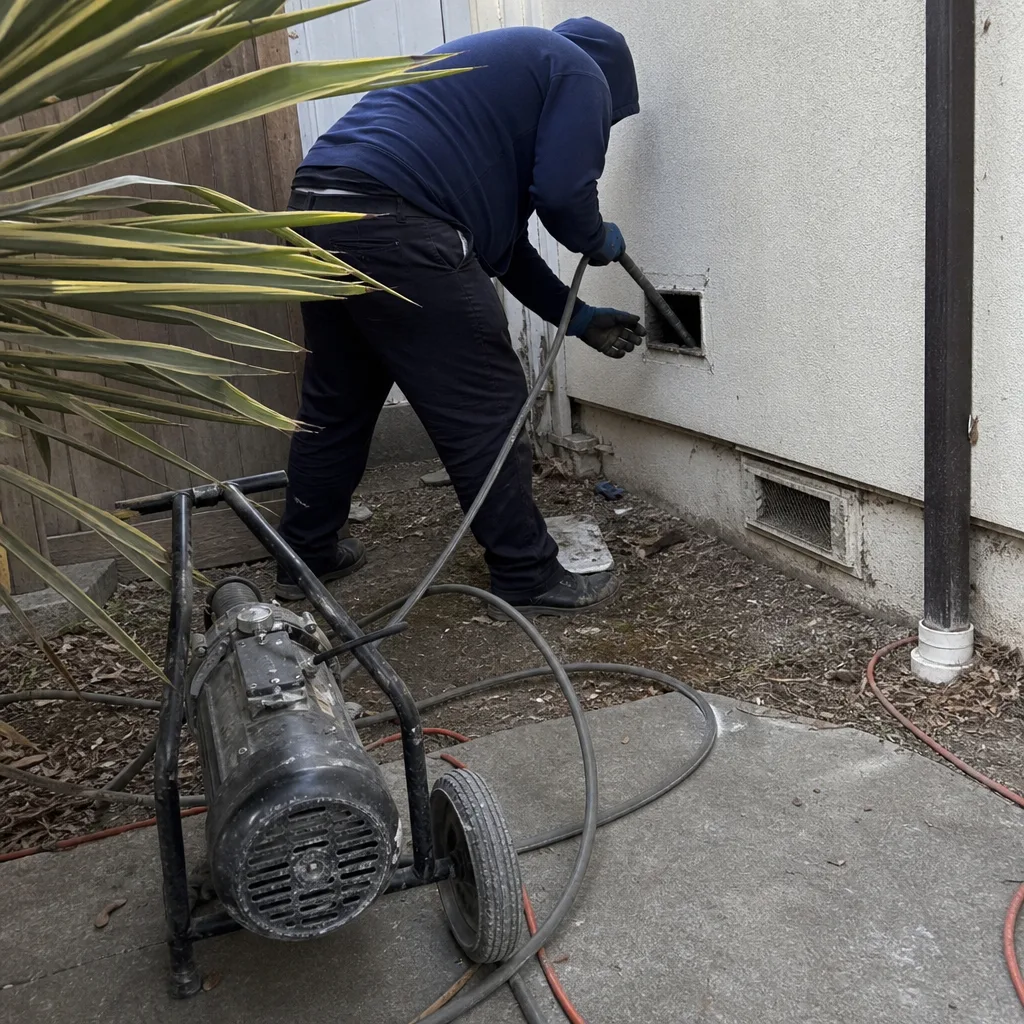
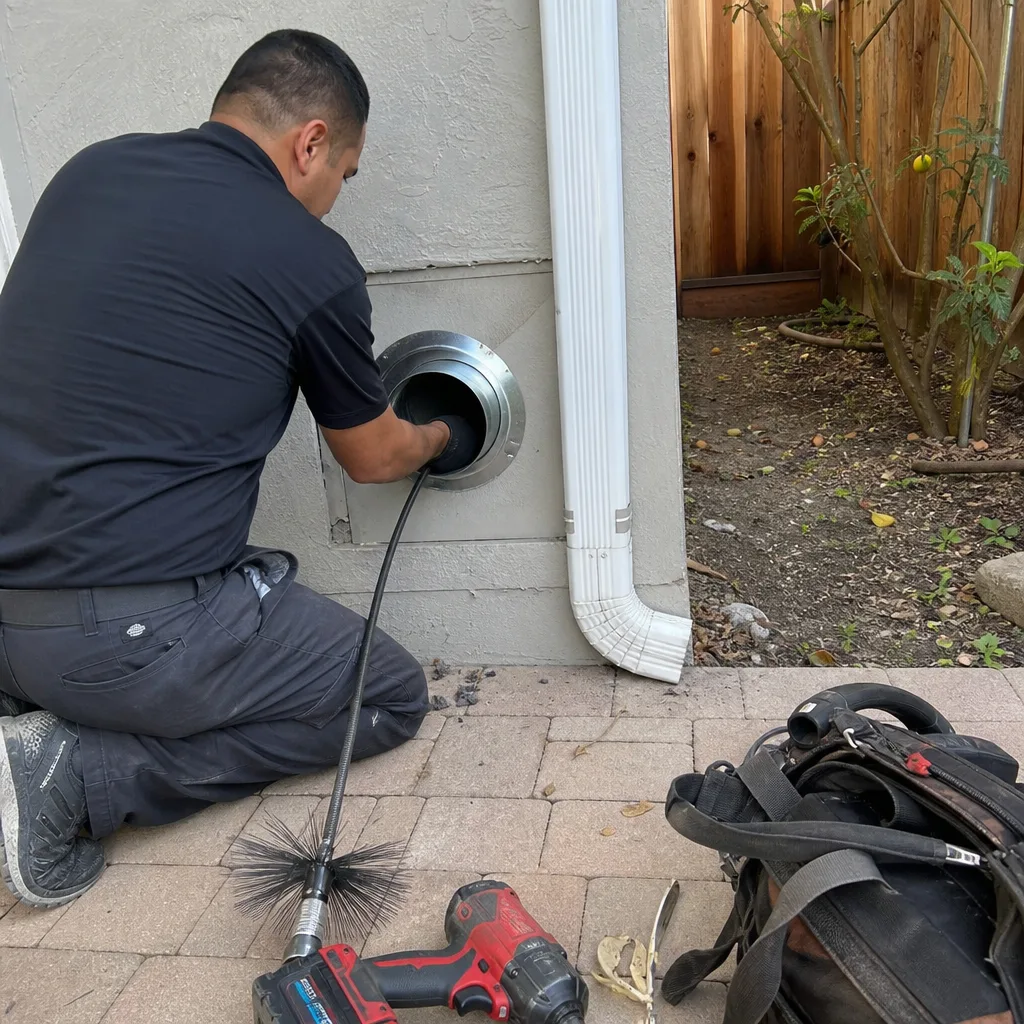
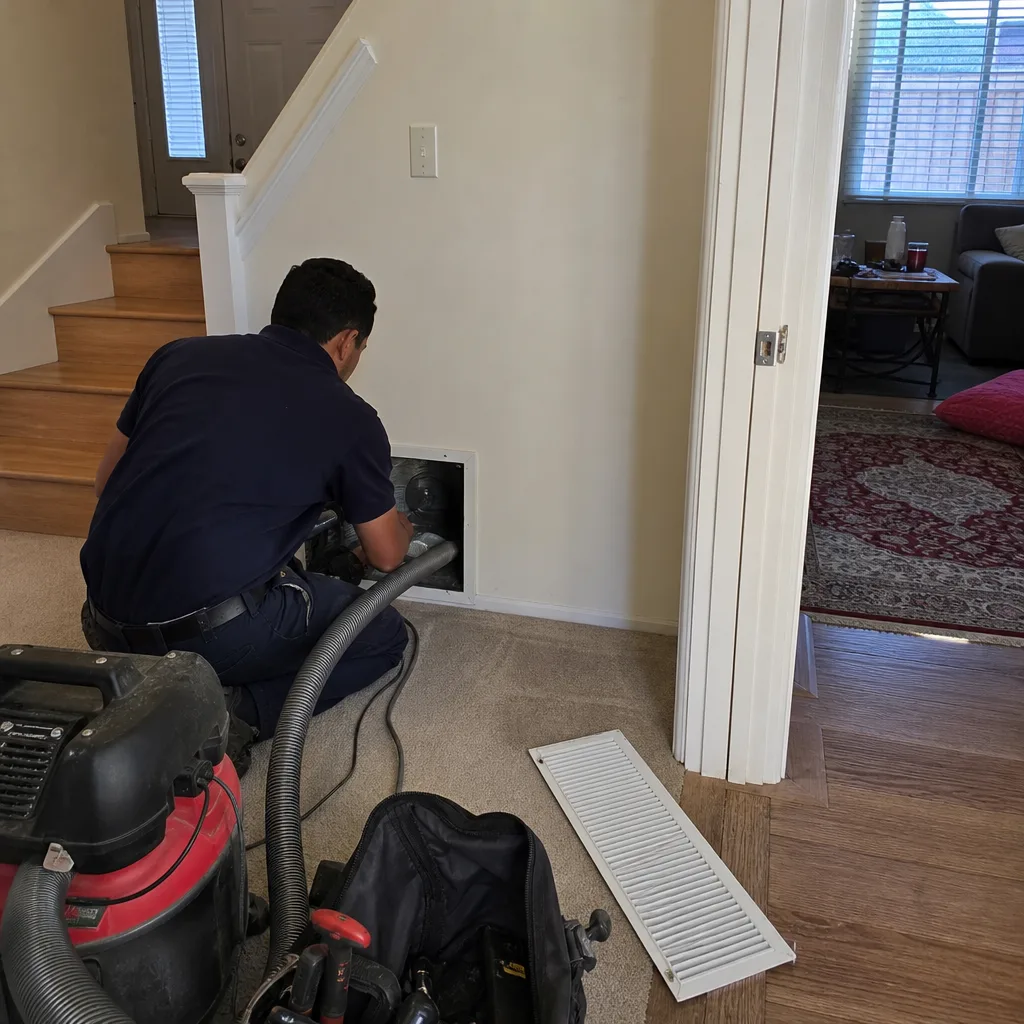
Whole-system duct and dryer vent check with before-and-after photos - you see exactly what came out of your vents
That "$99 whole-house special" is a bait ad - the real number appears once they are in your hallway, or the "clean" is a shop-vac at the register. We photograph the inside of your ducts before and after instead.
Air Duct Cleaning Permits, Codes & Inspections in CA: What You Need to Know
Most San Jose homeowners assume a duct cleaning is a duct cleaning. It isn’t. The moment a technician unfastens a section of duct, replaces a flex run, or reconnects a plenum, California law reclassifies the job from maintenance to mechanical modification. That reclassification carries permit requirements, inspection schedules, and insurance implications that nobody explains at the kitchen table. This guide walks the exact line between cleaning and construction, shows you how San Jose’s building department treats unpermitted duct work at resale, and gives you the questions to ask before anyone touches your system. For a deeper dive, see our Complete Guide to Air Duct Cleaning in San Jose.
Quick Answer
Air duct cleaning itself requires no permit anywhere in California, including San Jose. However, any repair, modification, replacement, or new installation of duct work falls under California Mechanical Code (CMC) Chapter 1, Section 105 and requires a permit from the local building department. Before any contractor does work beyond cleaning, ask one question: will you pull a permit for the repair, and can I see it before you start?
Styles & brands we work with
Table of Contents
- Cleaning vs. Modification: The Legal Line in California
- What Specifically Triggers a Permit
- How San Jose’s Building Department Handles Duct Permits
- Unpermitted Duct Work and Your Home’s Resale
- Insurance Implications of Unpermitted Duct Modifications
- What to Ask Before Work Begins
- How to Check If a Permit Was Pulled for Work Already Done
- Common Mistakes to Avoid
- When to Call a Professional
- Frequently Asked Questions
Cleaning vs. Modification: The Legal Line in California
The California Mechanical Code draws a bright line between two activities that look similar to a homeowner watching a technician work. Cleaning is what happens inside the existing system. Brushing the interior of a duct with a rotary tool, pulling negative pressure to remove debris, and sealing the access point when finished are all maintenance activities. No permit exists for maintenance. No inspection follows. The system is in the same configuration after the work as it was before.
Modification begins the moment any component is unfastened, removed, replaced, relocated, or newly installed. The CMC treats duct work as part of the mechanical system of the home, governed by the same permitting framework as furnaces and water heaters. When a technician in San Jose disconnects a duct run to “get better access” for cleaning and then reattaches it, the legal classification depends on what happened in between. If the same section went back in the same place with the same fittings, most inspectors would still call that maintenance. If the section was replaced, shortened, rerouted, or reconnected with new material, the job has become mechanical work subject to CMC Section 105.
The practical problem is that no homeowner sits and watches this distinction happen in real time. The technician finds a crushed flex duct while cleaning, says “this needs replacing,” and twenty minutes later a new section is in-exactly the scenario covered in our Air Duct Cleaning Warning Signs: A San Jose Homeowner’s Reference Guide. The homeowner never sees a permit because the technician never pulls one. The work is now unpermitted mechanical modification, and the homeowner owns that liability.
In our experience across San Jose, the transition from cleaning to modification happens most often in three specific situations: disconnected duct sections discovered during cleaning, rusted or collapsed return plenums, and flex duct that has been chewed through by rodents. Each is a real repair that requires a permit under California code. Each is routinely done without one.
What Specifically Triggers a Permit
The plain-English list below covers the work items that cross the line from maintenance to mechanical modification under the California Mechanical Code. This list is not exhaustive, but it captures what we encounter in San Jose homes every month.
- Replacing any section of duct. Whether it’s three feet of crushed flex in a crawl space or a rusted galvanized trunk in the attic, new duct equals new mechanical work. The CMC requires a permit because the system’s airflow balance, static pressure, and fire ratings are being altered.
- Installing a new duct run. Add a vent to a bathroom, extend a branch to a converted garage, or run a new return to balance pressure, and you’ve done installation work. Installations always require permits.
- Reconnecting a disconnected section. A section of duct that has separated from the plenum or from another section requires mechanical repair to reattach properly. Reconnecting it with screws, tape, and mastic is a repair, not a cleaning.
- Replacing a plenum, boot, or register box. These components are part of the mechanical system. Swapping one out is a modification, not maintenance.
- Modifying the return air path. Enlarging a return, adding a filter housing, or changing where return air enters the system alters the mechanical design. Permits apply.
- Adding or replacing a damper or zone control. These are mechanical controls. Installing them is governed by code and requires a permit.
- Any work that penetrates a fire-rated assembly. Duct passing through a garage wall, a fire wall, or a rated ceiling must maintain specific fire resistance. Touching this is mechanical work with life-safety implications, and a permit is non-negotiable.
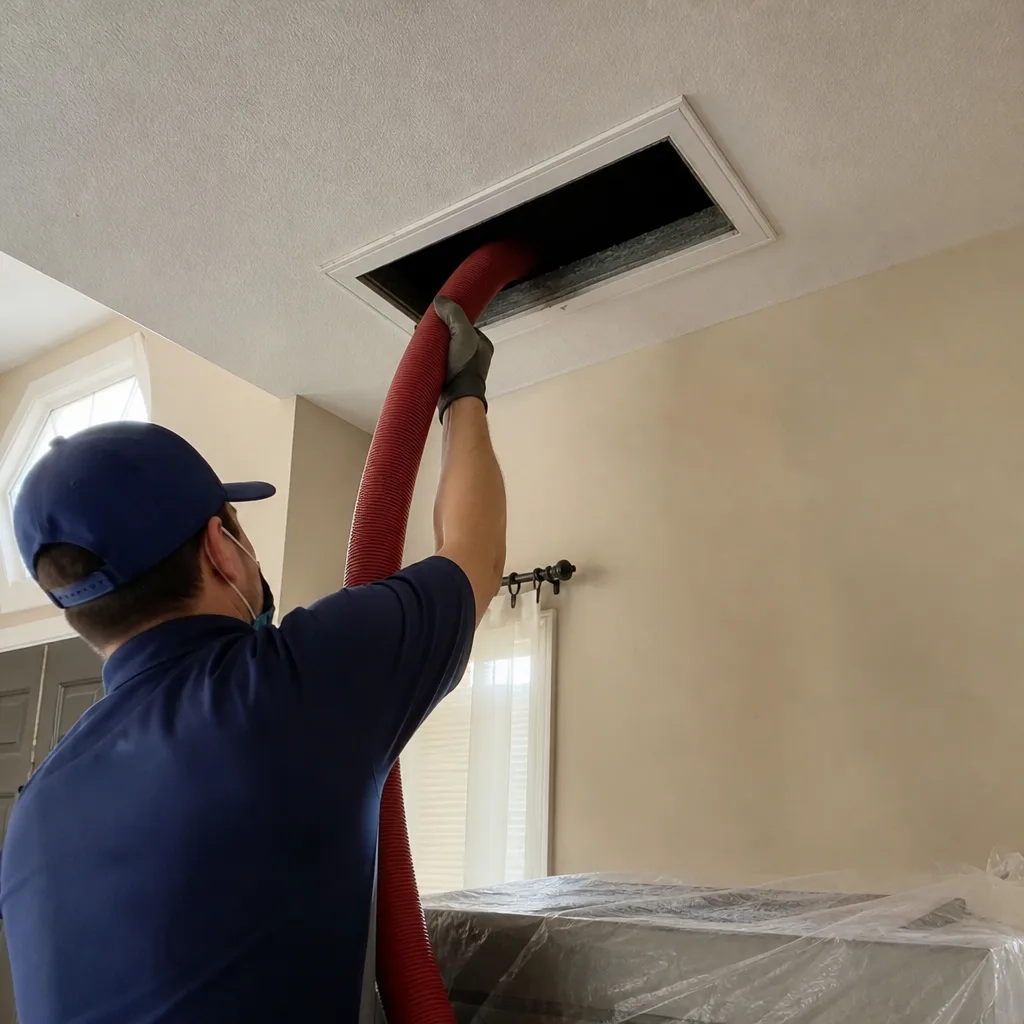
By contrast, the following activities fall squarely on the maintenance side and require no permit: brushing duct interiors, pulling negative pressure to extract debris, sanitizing surfaces with EPA-registered products, replacing the air filter, checking static pressure during a cleaning, and sealing the access hole created for cleaning tools. This is the full scope of what Air Duct Cleaning in San Jose includes when done by a company that stays in the maintenance lane.
The distinction matters because California’s permit process for mechanical work exists to protect the occupant, not to generate fees. Duct systems carry conditioned air through the home. A poorly executed modification can leak carbon monoxide from a furnace, depressurize a combustion appliance, or spread fire through a chase. The permit triggers an inspection, and the inspection is the mechanism that catches these failures before they become catastrophes.
How San Jose’s Building Department Handles Duct Permits
San Jose’s Department of Building & Code Enforcement operates under the California Mechanical Code with local amendments adopted by the City Council. For duct work, the city requires mechanical permits to be filed by a licensed contractor with a valid California C-20 warm-air heating, ventilating, and air-conditioning contractor’s license or a C-36 plumbing contractor when the work is incidental to that trade. A homeowner may pull a permit for work on an owner-occupied single-family residence, but the city will require proof of ownership and may require the work to meet all code requirements regardless of who performs it.
The permit process in San Jose works like this in practice. A contractor files a mechanical permit application with the Building Division, either online through the SJPermits portal or in person at City Hall. The fee is calculated based on the valuation of the work. For a typical duct repair, fees usually run between $150 and $400, though larger modification projects can push beyond that. Once the fee is paid and the permit issued, the contractor performs the work and then calls for an inspection. A city inspector visits the property, reviews the visible portions of the work, and either signs off or issues a correction notice.
The environmental factor most San Jose homeowners don’t consider is seismic. The city sits between the San Andreas and Calaveras fault systems, and building codes here reflect that geography. Duct work in crawl spaces and attics must be strapped and supported to remain in place during ground movement. A permitted inspection catches missing seismic strapping. An unpermitted job skips that check entirely.
San Jose also maintains a specific enforcement posture toward unpermitted mechanical work discovered during point-of-sale inspections. The city participates in the standard California disclosure process where a home seller completes a Transfer Disclosure Statement and a supplemental San Jose disclosure form that asks directly about known unpermitted work. When a home inspector identifies unpermitted duct modifications, the seller is required to disclose it. The buyer can then demand remediation, a price reduction, or the retroactive pulling of permits, which requires exposing the work for inspection and paying double permit fees in most cases.
The cleanest path in San Jose is the same as anywhere in California: have permitted work done, inspected, and documented before it ever becomes a disclosure issue. We direct every Kestrel Air Duct San Jose home visit toward this standard, and our technicians are trained to flag duct conditions that need a licensed mechanical contractor rather than a cleaning crew.
Unpermitted Duct Work and Your Home’s Resale
Unpermitted mechanical work creates a liability chain that runs from the day the work is done to the day the home is sold. In California, sellers are required by Civil Code Section 1102 to disclose all known material facts affecting the value or desirability of the property. Unpermitted duct modifications are material facts. A seller who knows about unpermitted duct work and fails to disclose it can be sued after escrow closes for fraud and misrepresentation.
The more common scenario is that the seller genuinely doesn’t know the duct work was unpermitted. The cleaning company said they “fixed a disconnected section” and the homeowner took that at face value. Years later, a buyer’s home inspector reports that a section of flex duct in the attic appears to be a replacement installation with no matching permit on record. The buyer’s agent asks the seller to produce permits. The seller makes a series of uncomfortable phone calls and eventually discovers no permit was ever pulled.
At that point, the deal usually survives only if the seller agrees to concessions. The buyer may demand the duct work be permitted retroactively, which in San Jose requires opening the wall or ceiling cavity for inspection, correcting any non-compliant work, and paying twice the standard permit fee. They may demand a price reduction equal to the estimated cost of that work. In a competitive market, buyers have walked away entirely, leaving the seller with a home that now has a documented unpermitted condition flagged by a professional inspection. That disclosure obligation stays with the home for all future buyers.
San Jose’s disclosure forms are more specific than the state forms. The city’s supplemental disclosure asks about mechanical system permits, modifications, and known code violations. Answering untruthfully carries the same fraud liability as the state form. Answering truthfully after an inspector found the work means the seller has admitted to a condition that will be negotiated against them.
The defensive move is to ask for permits any time work goes beyond cleaning. If the contractor can’t or won’t pull a permit, get it in writing that no work was performed beyond cleaning, and keep that document with your home records. It won’t erase unpermitted work, but it documents what the scope was understood to be at the time, and it shifts responsibility to the contractor who overstepped it.
Insurance Implications of Unpermitted Duct Modifications
Homeowners insurance policies in California contain language requiring the home to be maintained in compliance with applicable building codes. Most policies include an exclusion for loss caused by faulty workmanship, construction, or repair. A fire that originates in a homeowner-installed or unpermitted duct modification can serve as the trigger for a coverage investigation that lands badly for the homeowner.
The carrier’s argument is straightforward. Unpermitted duct work is non-compliant with the California Mechanical Code. Non-compliant mechanical work is a maintenance failure. Maintenance failures are excluded from coverage. The result is that a fire or water loss that touches an unpermitted duct modification can result in a denied claim, a partial denial, or a payout that covers only the damage not attributable to the unpermitted work.
This doesn’t mean carriers automatically deny every claim involving unpermitted anything. But it does mean the carrier has grounds to investigate, and that investigation can delay a claim for months while the policyholder lives in a damaged home. In San Jose’s hot housing market, a house fire or major water event is already expensive. Adding a coverage dispute because a duct cleaning technician welded a connector in the crawl space without a permit is a self-inflicted wound.
The cleanest protection is to require permits for any repair work and to keep the permit record with your insurance documents. If a claim is ever filed, the permit record establishes that the work was done to code and inspected by the authority having jurisdiction. That’s the document that shuts down a coverage investigation before it starts. We recommend every Dryer Vent Cleaning in San Jose customer do the same for their dryer exhaust system, since fires in unpermitted or improperly routed dryer ducts are one of the most common claims carriers investigate.
What to Ask Before Anyone Works on Your Ducts
The moment to establish permit responsibility is before work begins, not after a new flex run appears in your attic. Three sentences asked calmly over the phone or at the door will tell you everything you need to know about the company standing in your kitchen.
- “Will you pull a permit for any repair work beyond cleaning?” The right answer is yes, with no hesitation. The wrong answer is any variation of “you don’t need a permit for that,” “we handle it all the time without one,” or “we’ll see what we find.” A licensed C-20 contractor pulls permits as a matter of routine. A company that avoids them is telling you something about its licensing status.
- “What will you do if you find a disconnected or damaged duct section during cleaning?” The correct answer is: stop work, show you the finding, and discuss whether to bring in a licensed mechanical contractor or have them perform the repair as a permitted job. The red-flag answer is: “we’ll just reconnect it, no problem.” Reconnecting a separated duct section is mechanical repair, and it requires a permit.
- “Are you licensed in California for the specific work you’ll perform?” Air duct cleaning itself requires no contractor’s license in California, which is precisely why some cleaning companies drift into repair work they aren’t licensed to do. Ask for the license number and verify it against the Contractors State License Board database before anyone starts. If they can’t produce a C-20 license and they plan to do anything beyond cleaning, that’s your answer.
- “Will you document the scope of work in writing before starting?” A written scope protects both parties. It confirms the work will be limited to cleaning unless additional issues are identified, and it establishes that any repair beyond cleaning will be quoted separately, permitted, and inspected. Kestrel Air Duct San Jose provides a written price and scope before any work starts on every job, and the same standard should apply to any company you hire.
The three add-on services that most commonly cross the permit threshold are duct section replacement, plenum reconnection, and register boot replacement. Each of these is a mechanical repair under California code. Each requires a permit. Each is routinely offered by cleaning companies as a “simple fix” while the van is in the driveway. When you hear those words, ask for the permit.
How to Check If a Permit Was Pulled for Work Already Done
If you suspect unpermitted duct work was done in your home, or you’re buying a home and want to verify what the seller claims was permitted, Santa Clara County and the City of San Jose provide online tools to check. The process takes about fifteen minutes and gives you a definitive answer in most cases.
- Visit the San Jose SJPermits portal. The City of San Jose maintains an online permit search tool at the Building Division page. Enter the property address to see permits associated with that home. Mechanical permits will appear with the permit number, issue date, work description, and inspection status.
- Search the Santa Clara County permit records for unincorporated areas. Some San Jose-adjacent neighborhoods fall under county jurisdiction. The county’s online permit search covers those properties and works the same way: enter the address, review the permit history.
- Look for a mechanical permit with a work description that matches what you’re seeing. Permits are categorized by trade. Mechanical permits are the relevant category for duct work. Read the description to see if it matches the work you can see in the attic or crawl space. If there’s no mechanical permit on record and there’s obvious new duct work, the work was done without permits.
- Call the Building Division directly if the online search is inconclusive. San Jose’s Building & Code Enforcement Division can pull permit history by address over the phone. Request a “permit history search” for the property and specify you’re interested in mechanical work. Records go back decades, and staff can confirm whether a specific permit was ever pulled on a given date range.
- Check with the Contractors State License Board for the company that did the work. If you know which company performed the modification, look them up on the CSLB website. Confirm the company held a C-20 license at the time, and check the license’s history for citations or settlements related to unpermitted work. This won’t tell you whether they pulled a permit on your specific job, but it tells you whether the company has a pattern.
The permit record is the paper trail that separates compliant mechanical work from the kind of shortcut that creates liability. It’s worth the fifteen minutes to check, especially when you’re buying a home in San Jose, where disclosure forms ask specifically about unpermitted modifications and mechanical system condition.
Common Mistakes to Avoid
- Treating every duct company as the same. A company that only cleans ducts is bound by a different set of rules than a C-20 mechanical contractor who can legally perform repairs. Hiring the cleaning-only company and then asking them to “fix that disconnected section while you’re there” is how unpermitted work happens. Know the company’s license scope before you let them touch a fitting.
- Accepting “you don’t need a permit for this” without verification. This sentence comes from two places: a contractor who doesn’t want to spend the time on permitting, or a contractor who isn’t licensed to pull permits at all. Either way, the advice is self-serving. Verify against the California Mechanical Code or call San Jose’s Building Division directly. The city answers this question every day.
- Paying for a cleaning and a repair in the same invoice. When a cleaning company charges you $450 for cleaning and $300 for a “duct fix” on the same invoice, the repair portion is unpermitted mechanical work. The invoice actually documents the unpermitted work, which is the exact document a buyer’s agent or insurance adjuster will request later. Ask for separate documentation, and ask to see the permit for the repair.
- Waiting until the point-of-sale inspection to find out. Home inspectors and buyer-side HVAC professionals often flag unpermitted duct modifications during a sale. By then, you’re negotiating with disclosure obligations and price reductions in play. The time to discover unpermitted work is before it becomes a disclosure issue, ideally right after the work was done.
- Ignoring the seismic angle in San Jose. Duct work in this city must be strapped and supported for earthquake resistance. An unpermitted modification skips the inspection that verifies seismic strapping. After the next significant shake, poorly supported duct that separates from the plenum is an air quality hazard and a costly repair. The permit inspection exists partly to make sure the system stays where it belongs.
- Assuming your insurance covers unpermitted work. Policies exclude damage caused by faulty workmanship and maintenance failures. Unpermitted work lands in both categories. The time to think about insurance coverage is before a claim, not after the adjuster starts asking for permit records.
- Not reading the written scope of work. Any company that provides a written scope deserves to have it read. The scope tells you what work is authorized, what isn’t, and what happens if something is discovered. Signing a vague scope and then discovering a new flex run in your attic is a preventable outcome.
When to Call a Professional
If you have duct work that needs repair beyond cleaning, call a licensed C-20 mechanical contractor. If you’re not sure whether the work needs a permit, call San Jose’s Building Division and ask. If you’re buying a home in San Jose and the inspection report flags duct work that doesn’t match any permit on record, call a contractor to evaluate the condition of the work before you close. And if you simply need Air Duct Cleaning services from a company that will stay in the maintenance lane, document the scope in writing, and leave the repairs to a licensed pro, we can help. Kestrel Air Duct San Jose offers free estimates in San Jose. Call (669) 220-7869 to schedule yours.
Frequently Asked Questions
No permit is required for air duct cleaning anywhere in California, including San Jose. Cleaning that stays within the existing system – brushing, negative-pressure extraction, and sanitizing – is classified as maintenance under the California Mechanical Code. Permits only enter the picture when cleaning transitions into repair, replacement, or modification of duct components. If a technician uncovers a cracked return plenum or a disconnected duct section and proposes to fix it during the cleaning visit, that repair requires a permit.
Any installation, replacement, modification, or reconnection of duct work requires a mechanical permit under California Mechanical Code Chapter 1, Section 105. This includes replacing flex runs, installing new branch ducts, replacing plenums, boots, or register boxes, adding dampers or zone controls, and any work that penetrates a fire-rated assembly. The permit must be pulled by a licensed C-20 contractor or a homeowner working on an owner-occupied single-family residence.
San Jose calculates permit fees based on the valuation of the work. For typical duct repairs, fees run between $150 and $400, depending on scope, with larger modifications or new installations running higher. The exact fee is determined by the Building Division when the application is filed. Any contractor who performs permitable work without a permit is saving you money now and costing you significantly more at resale, when double fees apply to retroactively permit the work.
Use San Jose’s SJPermits online portal to search permit history by address, separated by trade. Look for mechanical permits with work descriptions matching the work you can see. If the property falls under Santa Clara County jurisdiction, use the county’s permit search tool instead. For a definitive answer, call San Jose’s Building & Code Enforcement Division and request a permit history search for the address, specifying mechanical work. The search takes minutes and costs nothing.
Yes, a homeowner can pull a mechanical permit for work on an owner-occupied single-family residence. They must prove ownership and must comply with all applicable code requirements including inspection scheduling. However, most San Jose homeowners find the process difficult to navigate for duct work, and a licensed C-20 contractor is usually the more practical path. If you go the homeowner route, plan to be present for the inspection and document the permit record with the rest of your home paperwork.
Yes, and San Jose makes it more consequential than most cities because of the supplemental disclosure forms the city requires. Sellers must disclose known unpermitted work under Civil Code Section 1102, and San Jose’s forms ask specifically about mechanical systems and code compliance. Once an inspector flags unpermitted duct work, the seller faces demands for retroactive permitting, price reductions, or buyer walk-away. The liability lands on the seller regardless of who actually performed the unpermitted work. For more guides & resources, explore our blog, or call (669) 220-7869 if you’d like a second opinion on anything in this guide – our consultations are free.
The Bottom Line
Duct cleaning in San Jose requires no permit. Duct repair does. The line between the two is California Mechanical Code Section 105, and the practical difference is a licensed contractor pulling a permit when a disconnected section, crushed flex run, or rusted plenum shows up during a cleaning. Every homeowner should ask the permit question before work starts, verify permits online if work was already done, and keep the paper trail for resale and insurance purposes. None of this is complicated once you know the rule. The complication only appears later, at resale or after a claim, when nobody can find a permit that should have been pulled. Written by Dale Whitmore, Owner at Kestrel Air Duct San Jose, serving San Jose since 2004.
See the difference
 Before
 After
After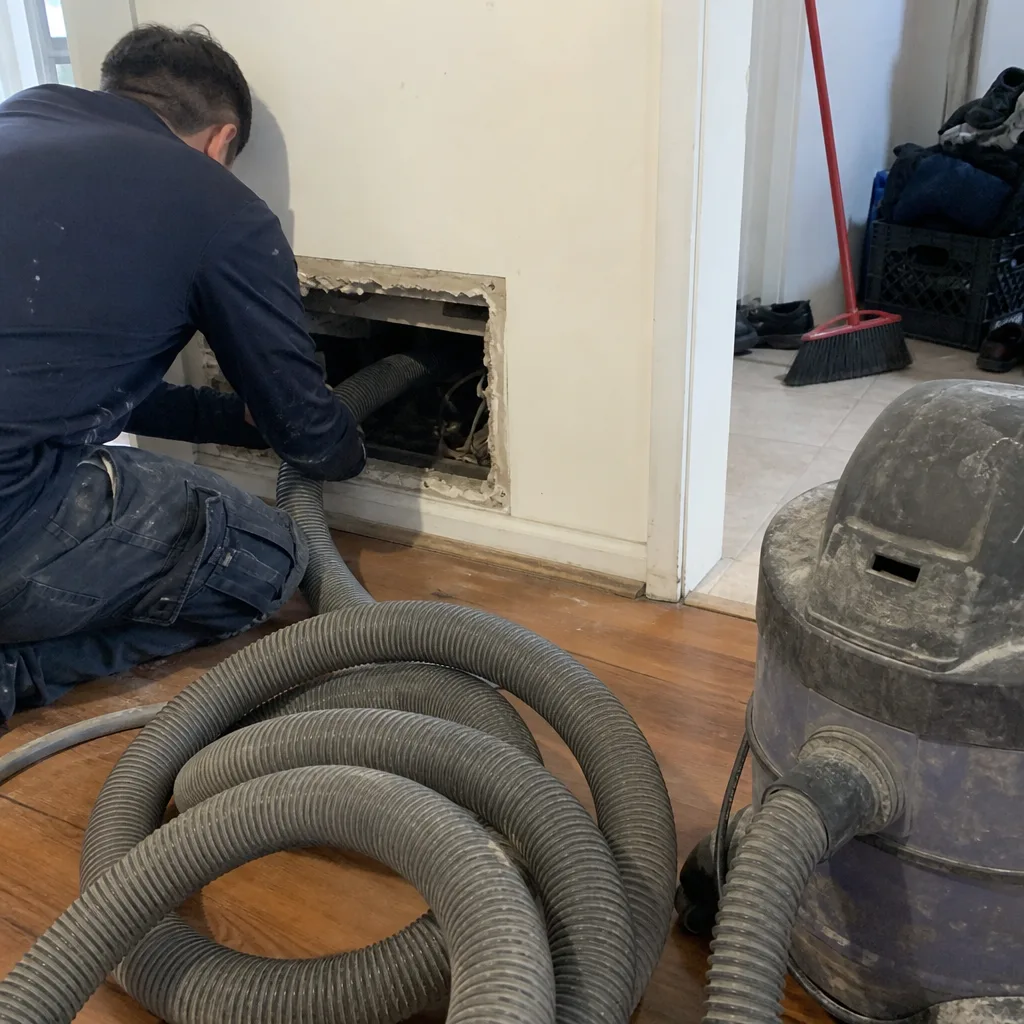 Before
 After
After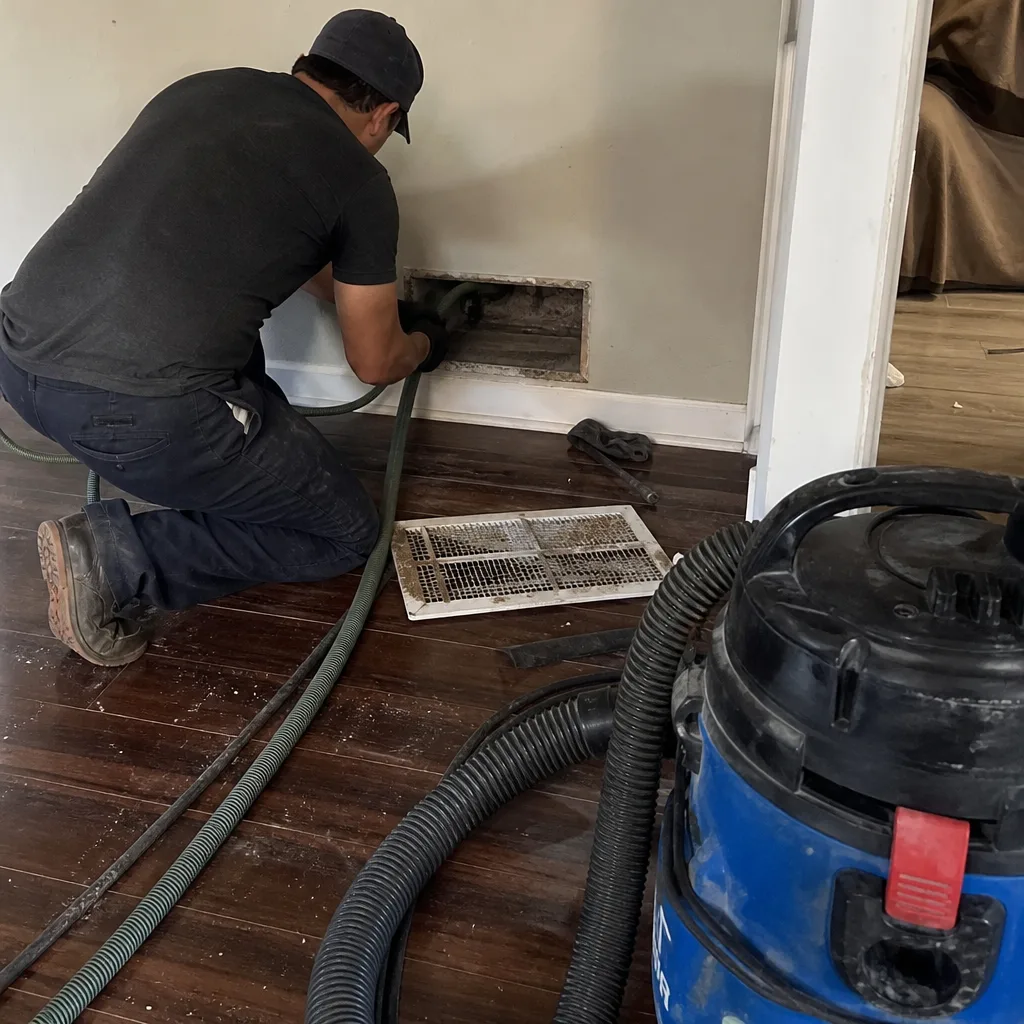 Before
 After
After