
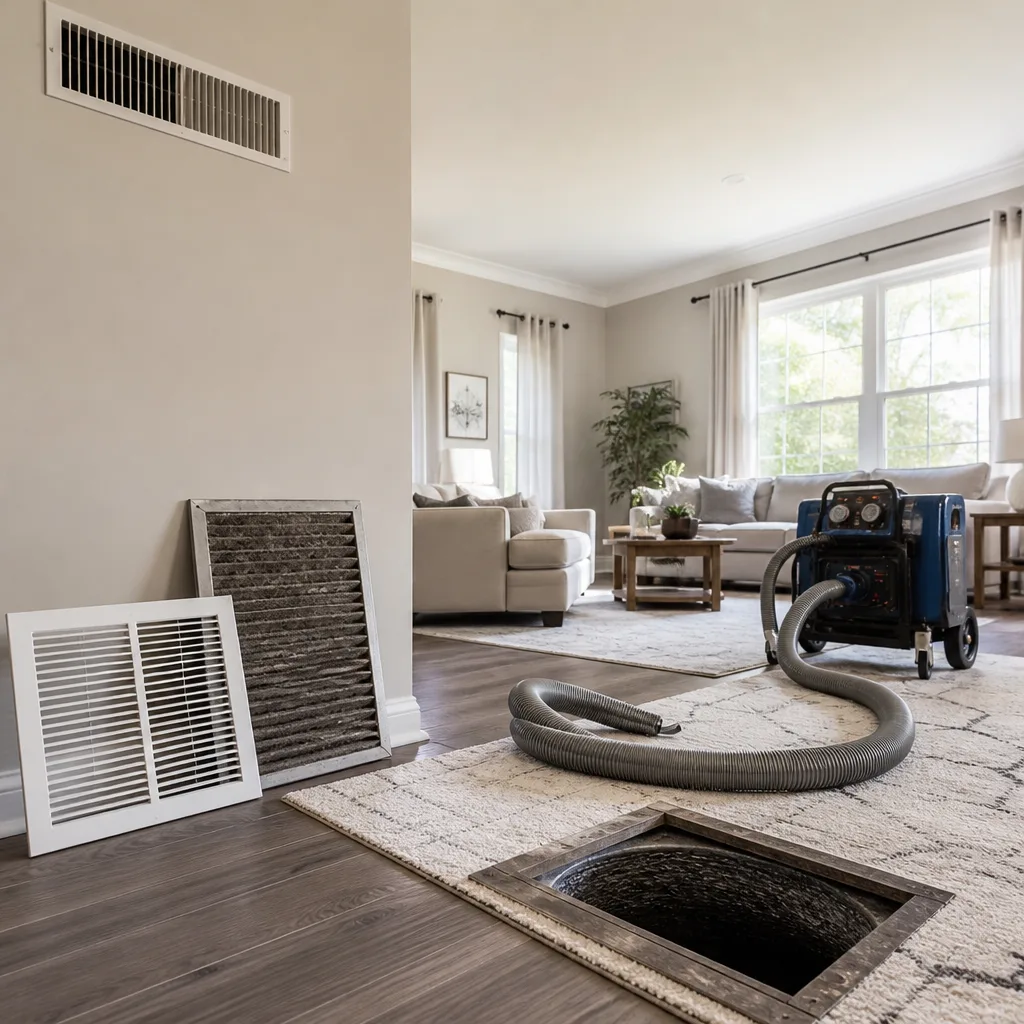
 Whole-home duct cleaning
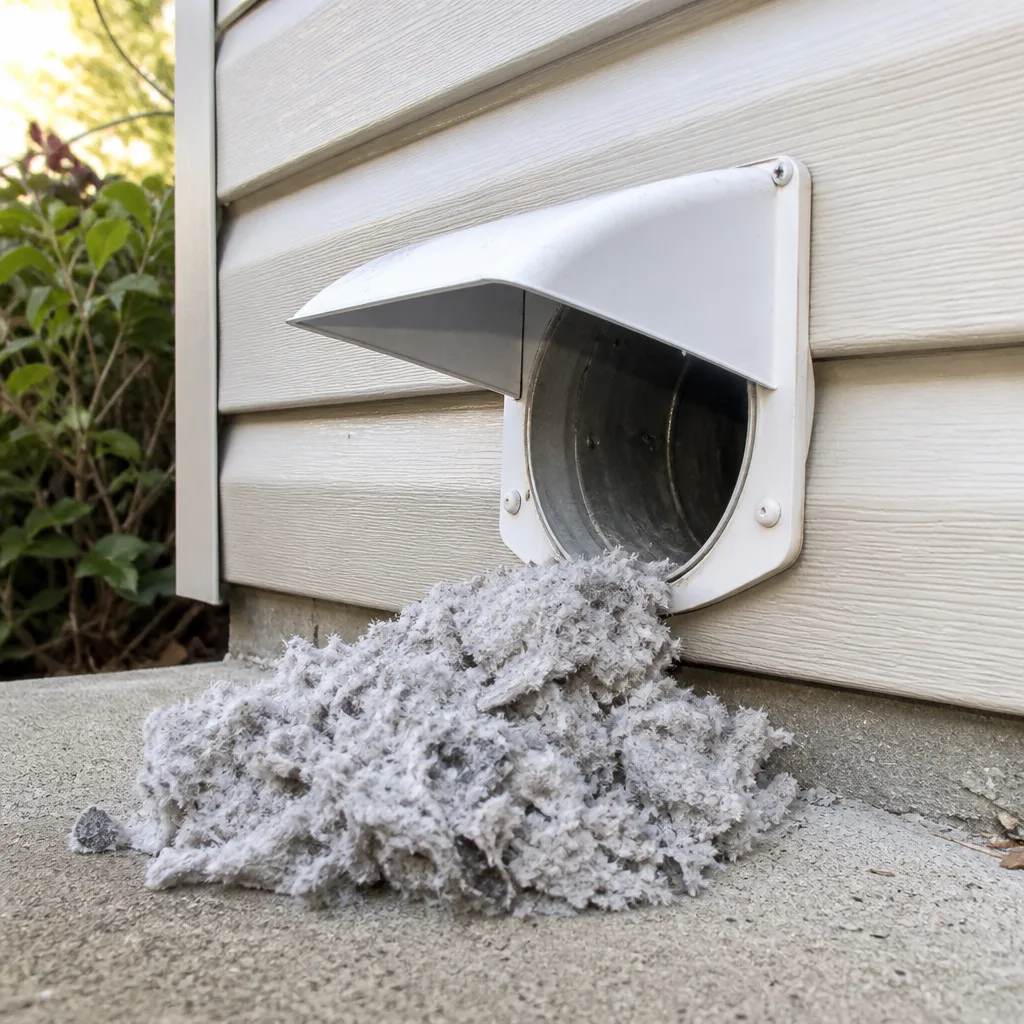 Dryer vent cleaning
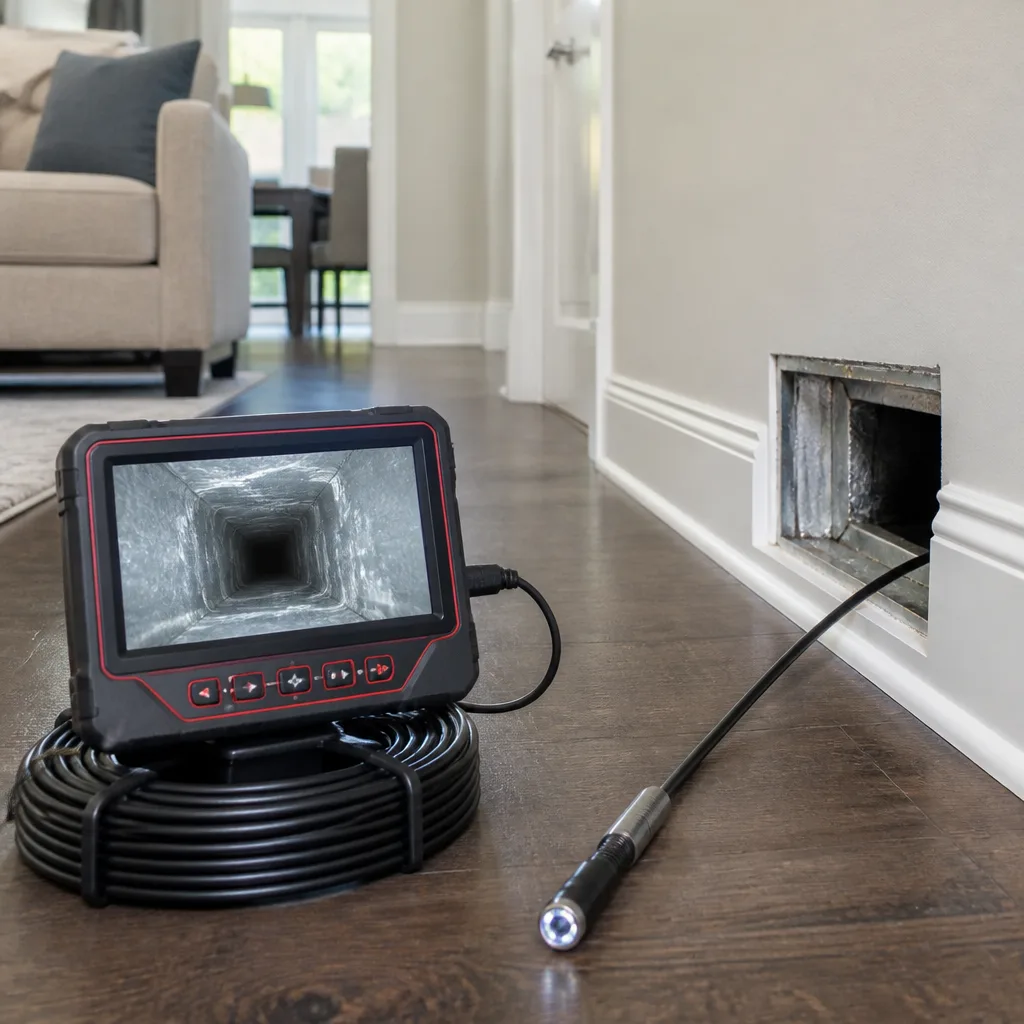 Camera inspection
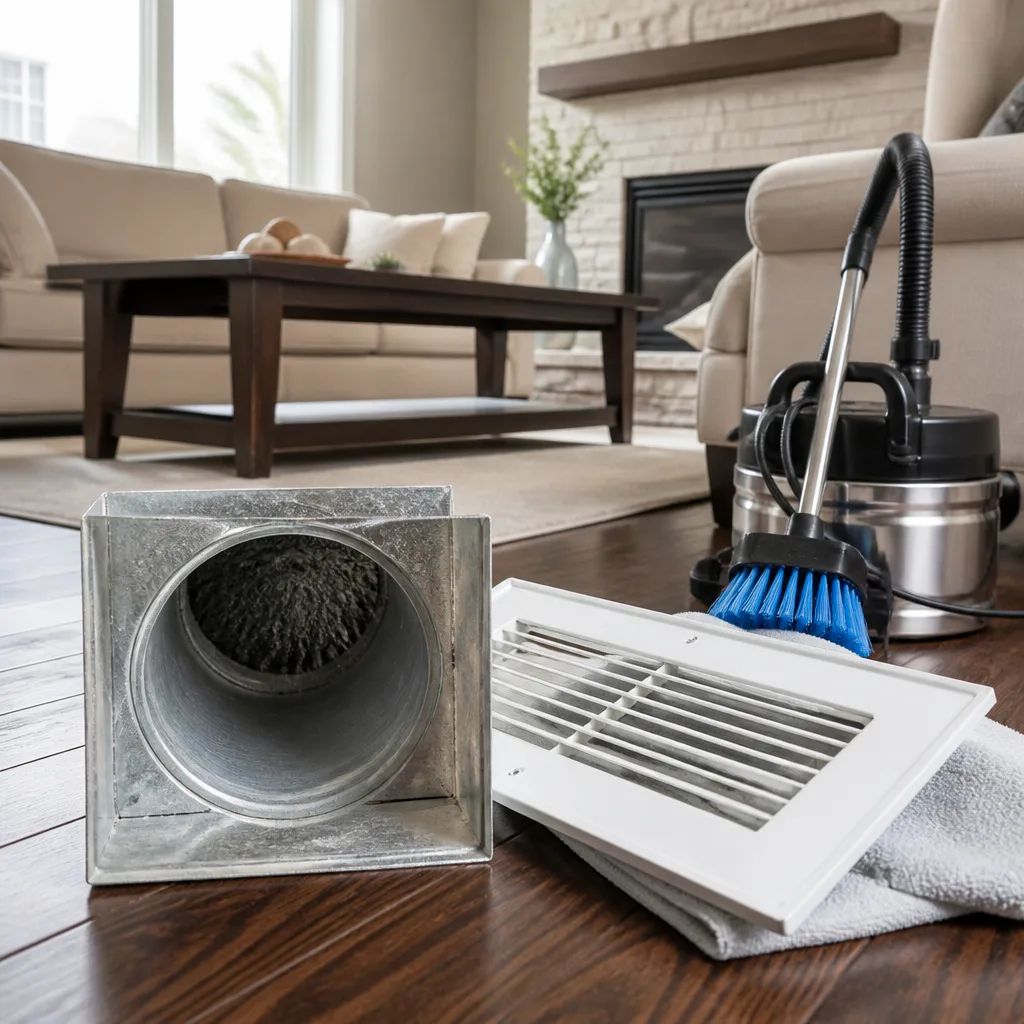 Sanitizing & deodorizing
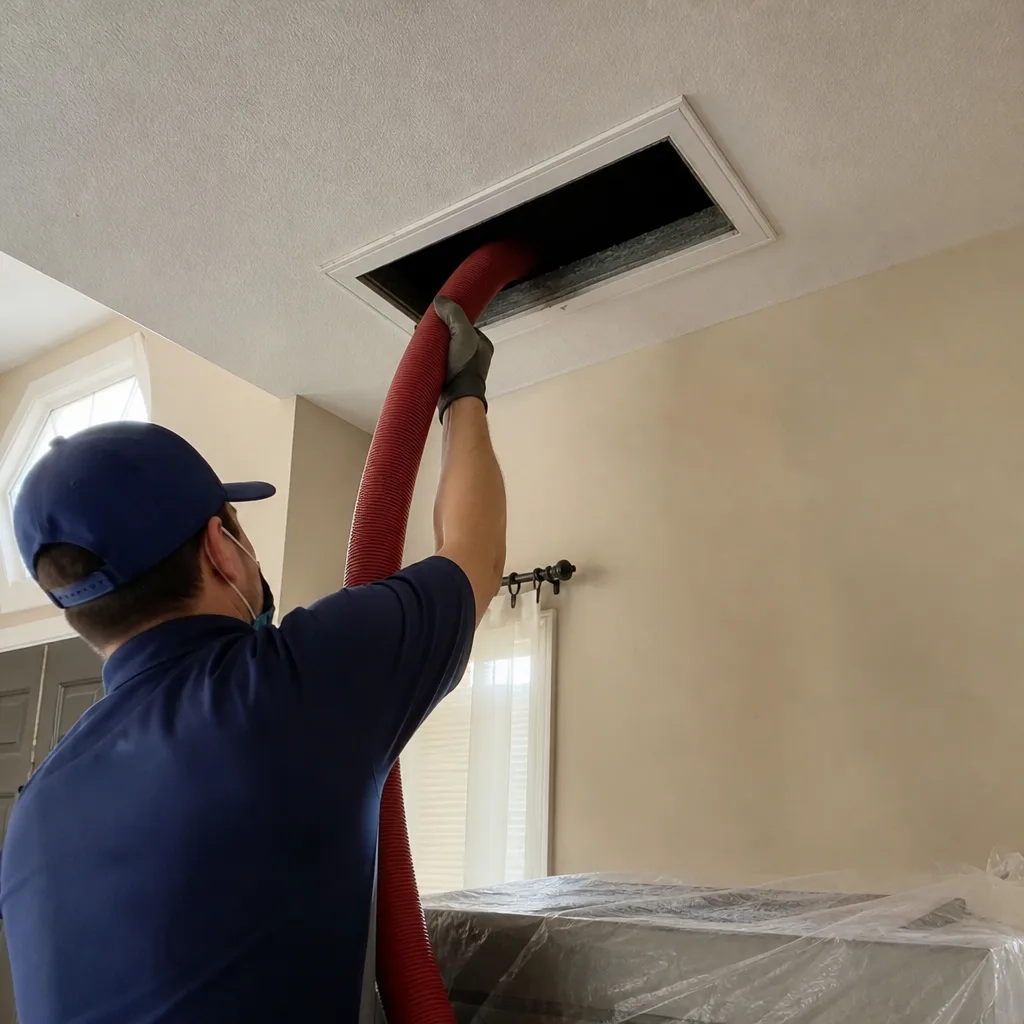
Whole-system duct and dryer vent check with before-and-after photos - you see exactly what came out of your vents
That "$99 whole-house special" is a bait ad - the real number appears once they are in your hallway, or the "clean" is a shop-vac at the register. We photograph the inside of your ducts before and after instead.
Nikro Register & Grille Cleaning: The San Jose Owner’s Guide
Register and grille cleaning on a Nikro negative-air system in San Jose typically runs between $120 and $240 when performed as part of a full duct cleaning, or $80 to $150 as a standalone service call. Most jobs are completed same-day once we’re on site, since the registers and grilles come out, get hand-washed with an antimicrobial solution, and go back in while the Nikro unit is still pulling air.
Here’s how most owners find us: the air coming through a particular vent smells musty, or they pull a register off to change a filter and find it crusted with a gray film that won’t wipe off with a damp cloth. That film is usually a mix of cooking oils, dust, and condensation that baked onto the stamped metal over several heating seasons. It’s normal. It’s also exactly what Nikro negative-pressure cleaning is built to handle, but only if the registers themselves get the same attention as the trunk lines.
If you’re noticing that, you’re in the right place. We’re Dale Whitmore’s crew at Kestrel Air Duct San Jose, and we work with Nikro equipment every week. We are an independent service provider, not affiliated with Nikro directly. That matters because we carry both OEM Nikro replacement registers and quality aftermarket equivalents in the van, so we don’t have to order parts and reschedule.
Which Nikro Models This Applies To
Nikro register and grille cleaning is part of the process on every residential negative-pressure unit we run, but the register replacement question comes up most on two specific system types. If your unit was installed with Nikro’s standard residential package – typically the Nikro 6000 or 8000 series blower paired with a HEPA filter module – the registers in your walls are almost always standard stamped-steel residential registers, and aftermarket equivalents fit just fine. The Nikro name on the blower doesn’t change the register dimensions; what changes is the cleaning approach, because the negative pressure needs to stay balanced while registers come off.
The one compatibility gotcha we see in San Jose homes is with older Nikro installations that used custom-cut aluminum grilles rather than off-the-shelf registers. If your grille has no visible manufacturer stamp and the blade spacing is irregular, measure the opening before you buy anything. Standard register sizes cover most openings – 4×10, 4×12, 6×10, 6×12 are the workhorse sizes – but a custom cut needs a matching replacement, and we’ll measure it on site before quoting.
OEM versus aftermarket: for Nikro registers specifically, we’re honest with customers. The OEM stamped-steel register is fine, but a heavy-gauge aftermarket register often outlasts it in Bay Area homes because our humidity swings cause the thinner gauge metal to oxidize faster. If your existing register is rusting at the blade edges after five or six years, that’s the tell that you’d do better with a heavier gauge piece, whether or not it says Nikro on it.
Styles & brands we work with
Signs Your Nikro Register & Grille Cleaning Is Failing
- Residue rebuilds within a month of a cleaning. If that gray film comes back fast, it means the register was wiped but not removed and soaked, so the buildup in the blade channels re-emulsified as soon as the HVAC kicked back on. Hand-washing has to get into the gaps, not just the face.
- Blades won’t stay where you set them. Stamped-steel register blades rely on friction against the metal frame. Once oxidation or repeated bending loosens that friction, the blades flop. It’s not adjustable in most cases – the register has simply worn out.
- Visible rust at the edges or screw holes. In San Jose, we see this in homes with older single-pane windows and poor bathroom ventilation. Condensation settles on the metal, and over several winters the register starts to flake. Rust in the screw holes means the register may crack when removed.
- Whistling or chirping at certain airflow settings. A register that’s bent slightly can hum at specific blower speeds. More often, buildup has narrowed the gap between blades enough to accelerate air velocity, which is what creates the whistle. Cleaning usually fixes this; replacement fixes it permanently.
- The register no longer sits flush against the wall or floor. Floor registers in particular take abuse from foot traffic, furniture, and vacuums. Once the flange bends, the register can’t seal, which lets air leak around it into the wall cavity instead of the room. That’s a replacement, not a cleaning.
Replacement Cost & What’s Included
For most San Jose homes, replacing worn registers alongside a Nikro negative-air cleaning adds $15 to $45 per register for standard stamped steel, and $25 to $65 for heavy-gauge aftermarket or OEM Nikro pieces. Standalone register replacement without a full cleaning runs $80 to $150 for the visit, which includes up to six registers. Beyond six, each additional register adds its part cost plus a modest labor increment.
What drives the range: the number of registers, whether they’re floor or wall mounted (floor registers tend to be more damaged), and whether the original pieces are standard sizes or custom cuts. The replacement price always includes the new register, removal of the old one, cleaning of the rough opening so you’re not sealing debris into the cavity, and proper seating so airflow returns to what the Nikro system was designed for.
Every replacement is covered under our 365-Day Done Right Promise in writing. If a register we installed fails, comes loose, or doesn’t seat properly within a year, we return and make it right at no charge. The Kingswell Guarantee applies here the same as it does to a full duct cleaning – written price before we touch anything, a defined arrival window, a clean work area, and the written promise on the work itself.
See the difference
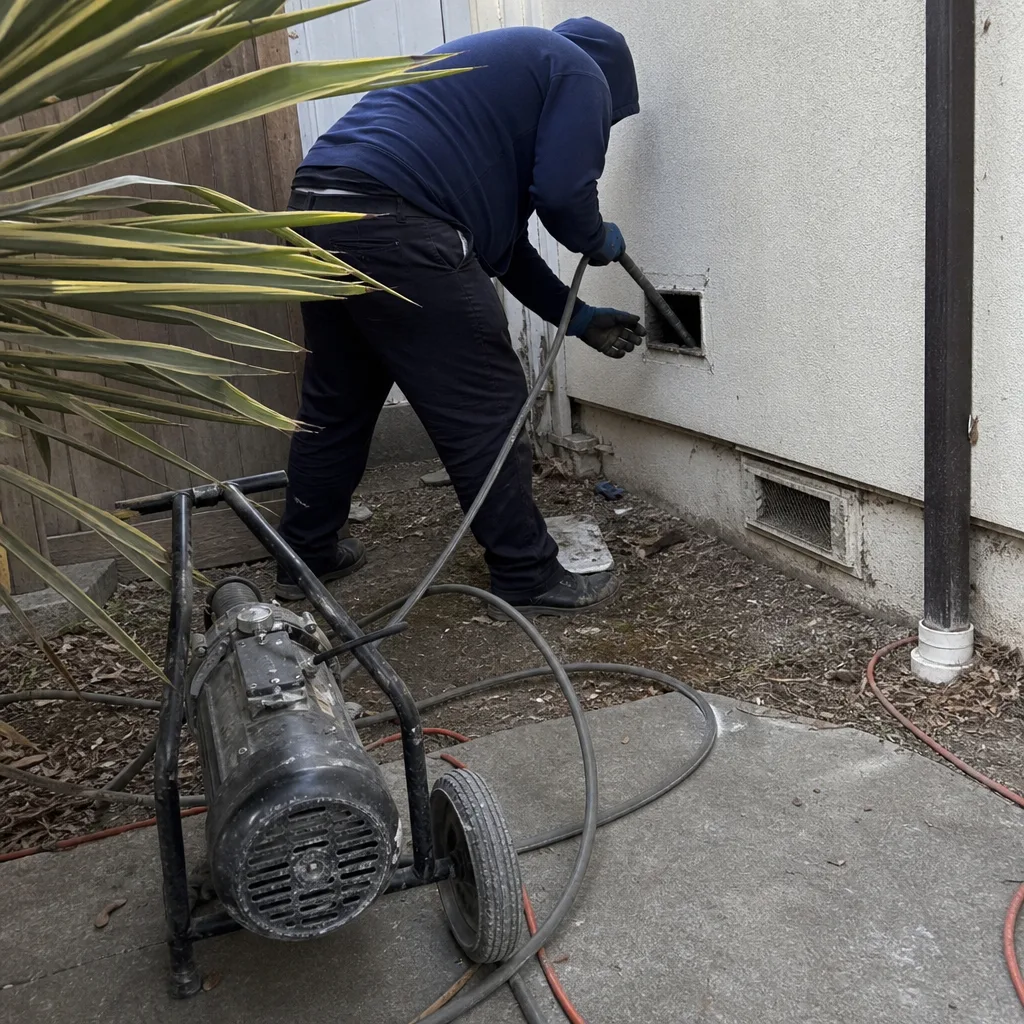 Before
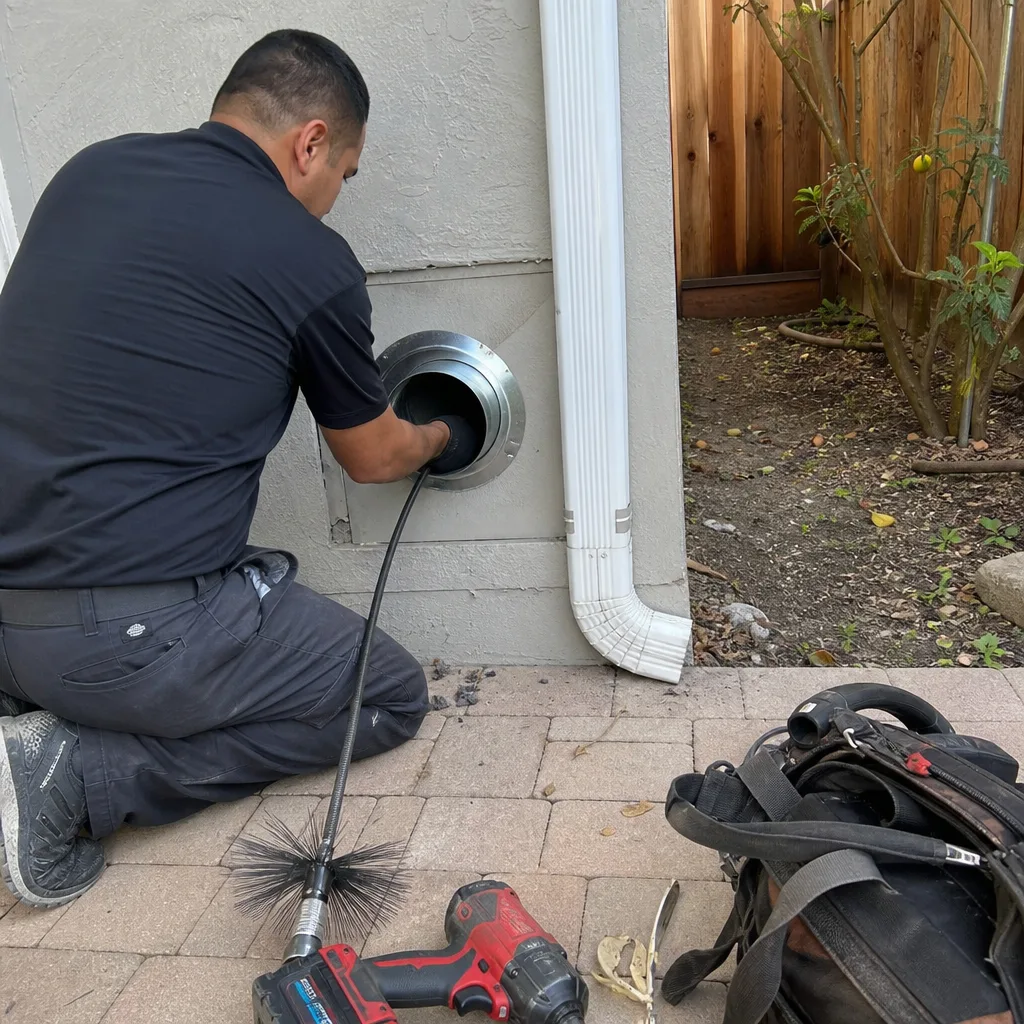 After
After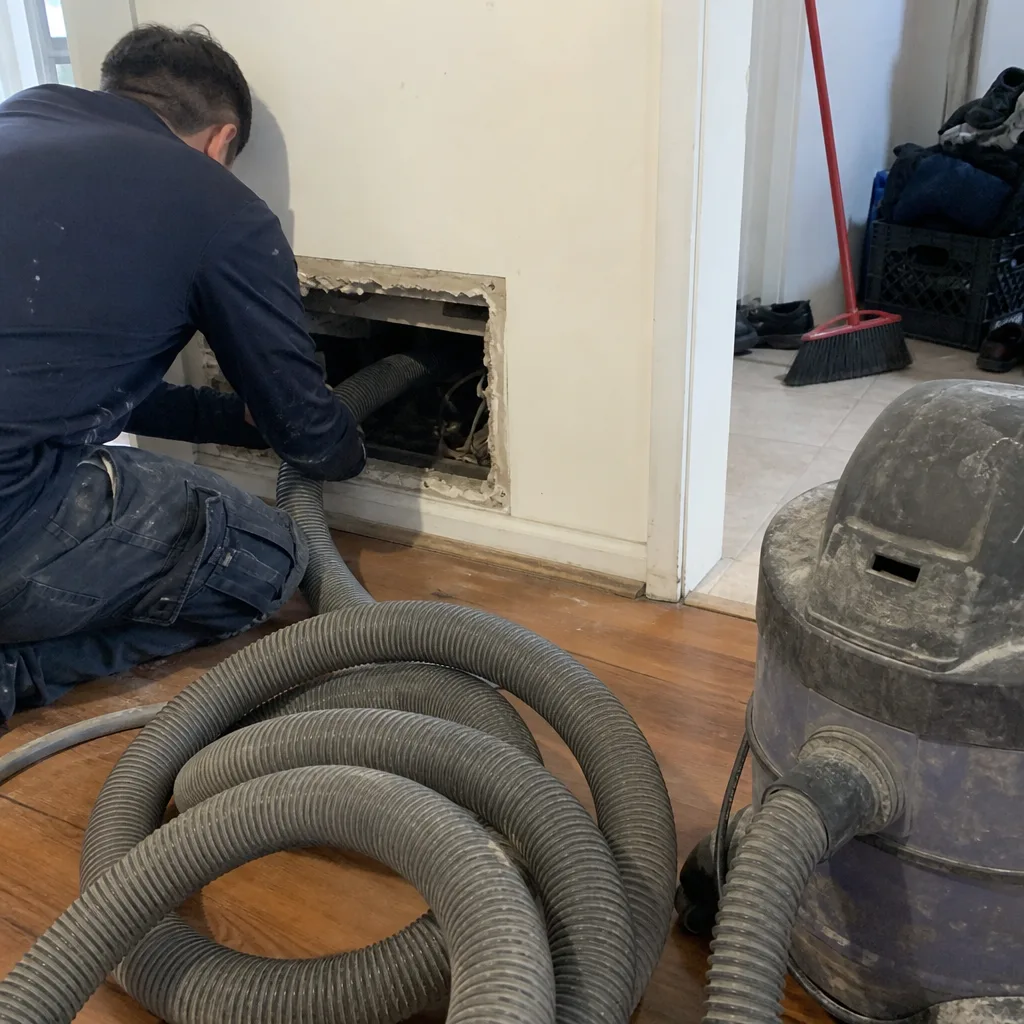 Before
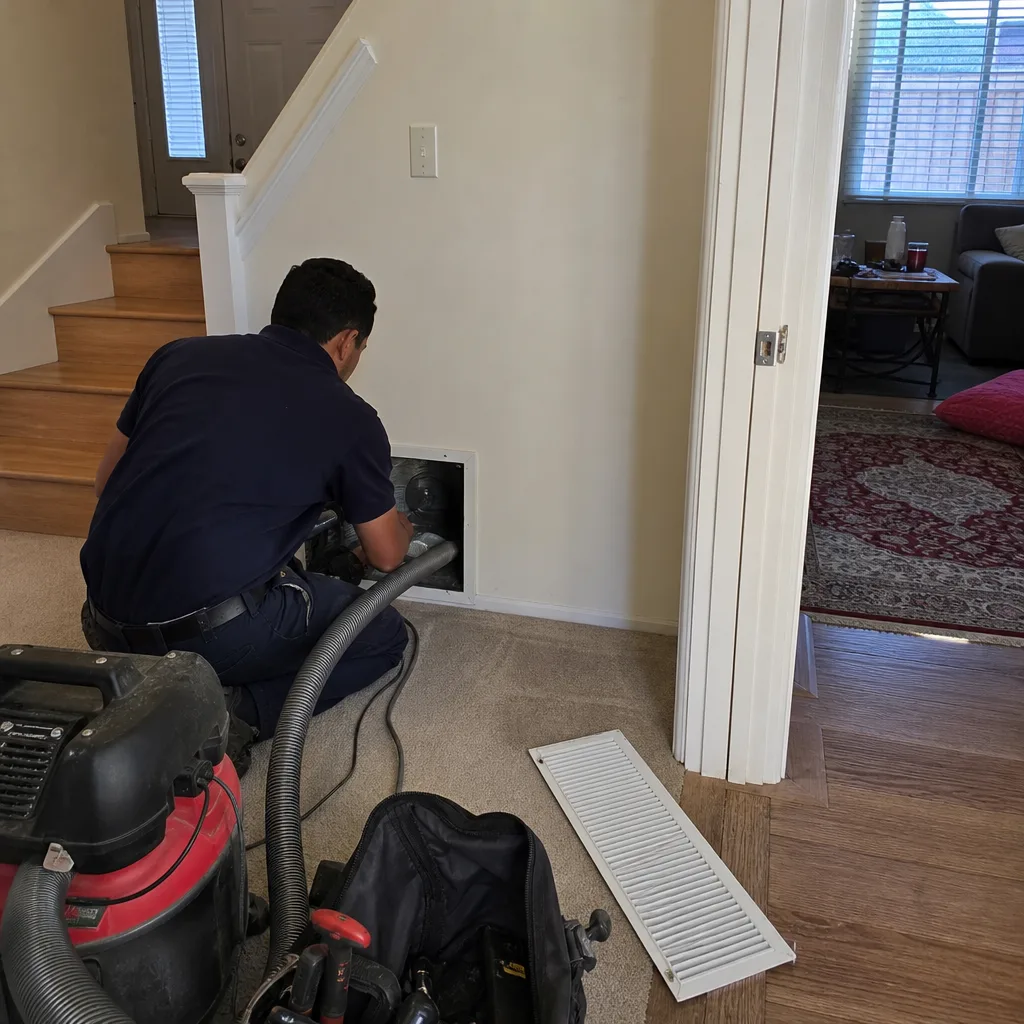 After
After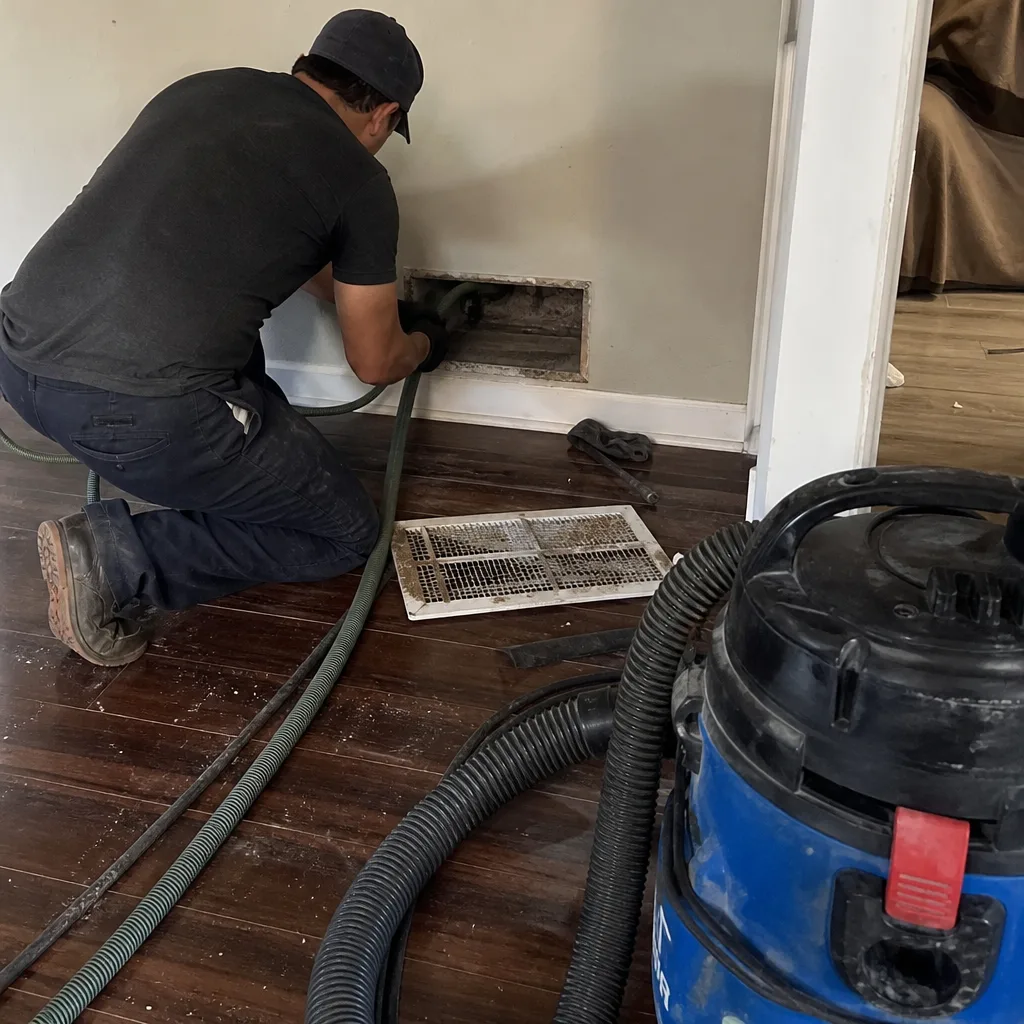 Before
 After
AfterDIY or Call Us?
Register and grille cleaning is one of the safest DIY tasks in the HVAC world, and I’ll tell you that straight. If you want to pop a register off and soak it in a sink with warm water and dish soap, that’s low-stakes and worth doing between professional cleanings. The risk is mostly in the reinstallation – cross-threading a screw into an old cast-metal register box, or bending a flange trying to force a floor register back into a warped opening. If the metal is rusted at the screw holes or the register won’t sit flush, that’s the point to call us at (669) 220-7869 rather than forcing it.
The other place DIY goes wrong is assuming the register is the whole problem. That gray film often extends six to eight inches into the duct boot behind the register. The Nikro negative-air system pulls that out during cleaning; a sink soak only addresses what you can see. If you’re seeing fast re-soiling, the duct work behind the register is the source, and that’s what our Nikro equipment is specifically built to handle. Clean ducts don’t need a sales pitch – the airflow speaks for itself.
FAQs
In San Jose homes, we see stamped-steel registers lasting eight to twelve years before blade sag or edge rust makes them worth replacing. Floor registers on the short end of that range because foot traffic and seasonal moisture shorten the metal. Heavy-gauge aftermarket replacements often outlast the originals by several years because the thicker metal resists bending and holds its finish longer. If yours are rusting at the edges before the ten-year mark, it’s usually a humidity issue in the house, not a defect in the register. Call (669) 220-7869 and we’ll assess what’s actually going on.
Usually no, and honestly, the repair isn’t worth it. Stamped-steel registers can’t be re-tensioned at the blade joints in a way that lasts, and once rust has started at the screw holes the structural integrity is compromised. You can clean surface rust and repaint, but the register will fail again within a season or two. Replacement is almost always the better call, and standard sizes are inexpensive enough that repairing simply doesn’t pencil out. We’ll quote the straight replacement price before any work starts.
Register replacement adds roughly five to ten minutes per register when we’re already on site for the cleaning. A standalone replacement visit covering up to six registers takes us about an hour, including cleaning each opening and testing airflow before we leave. The Nikro unit itself runs throughout, so the home’s air keeps moving while we swap pieces out.
We stock standard residential register sizes in both OEM Nikro-compatible and heavy-gauge aftermarket options on the van. The only time we order anything is when a home has custom-cut grilles that don’t match a standard size, and in San Jose that’s maybe one job in twenty. We also work with Lennox, Trane, and Carrier system parts when those registers cross over with standard residential sizes. If we can’t match it from stock, we’ll measure it, show you the verified replacement, and schedule the return visit within the week.
Talk to Us About Your Nikro Registers
If your registers are rusted, whistling, or re-soiling weeks after a cleaning, we’ll come take a look and give you a written price before any work begins, same as we’ve done on every job since 2004. Call (669) 220-7869 for a free estimate. We answer with a live person any time of day, and Dale leads a crew that shows up in the window we give, does the work under the Kingswell Way code, and leaves your registers seating properly with the guarantee in writing.
Written by Dale Whitmore, Owner, Kestrel Air Duct San Jose at Kestrel Air Duct San Jose, serving San Jose and nearby areas.