
Last updated October 15, 2026
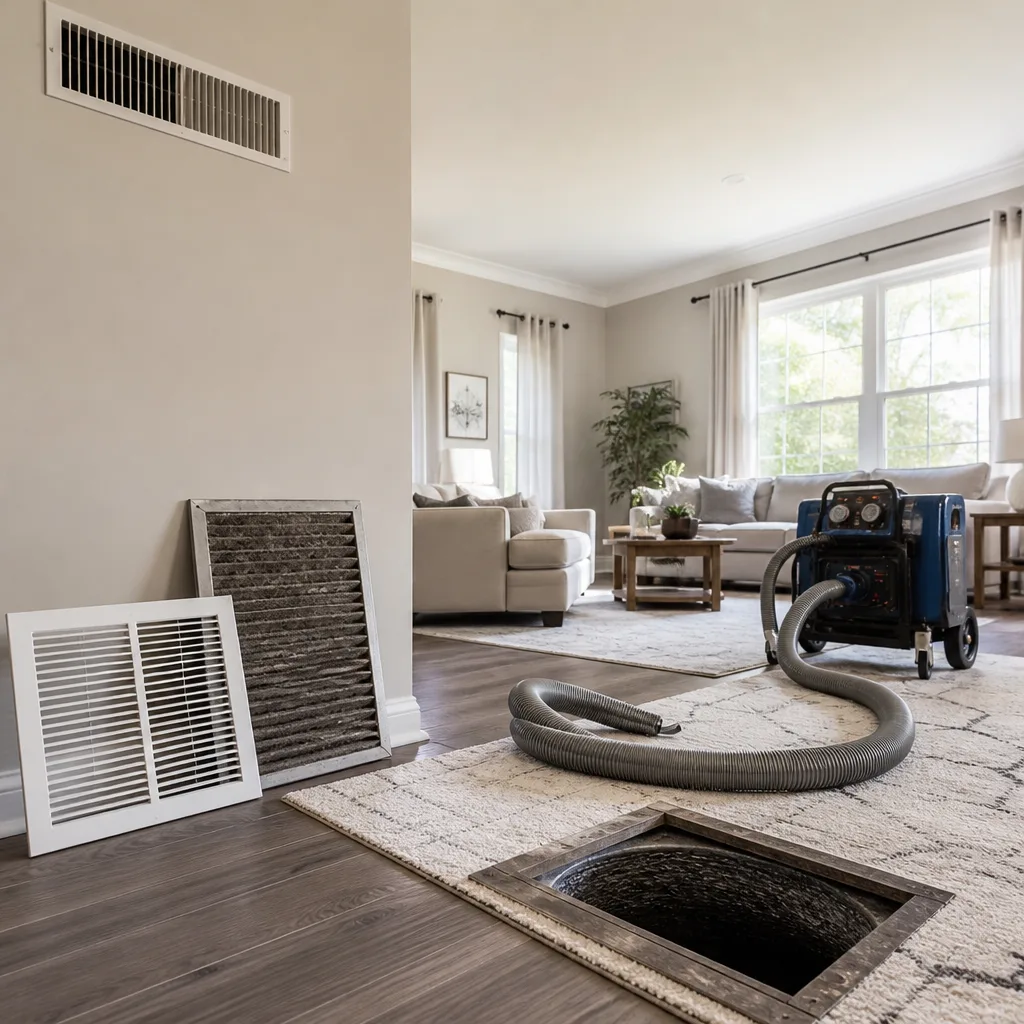 Whole-home duct cleaning
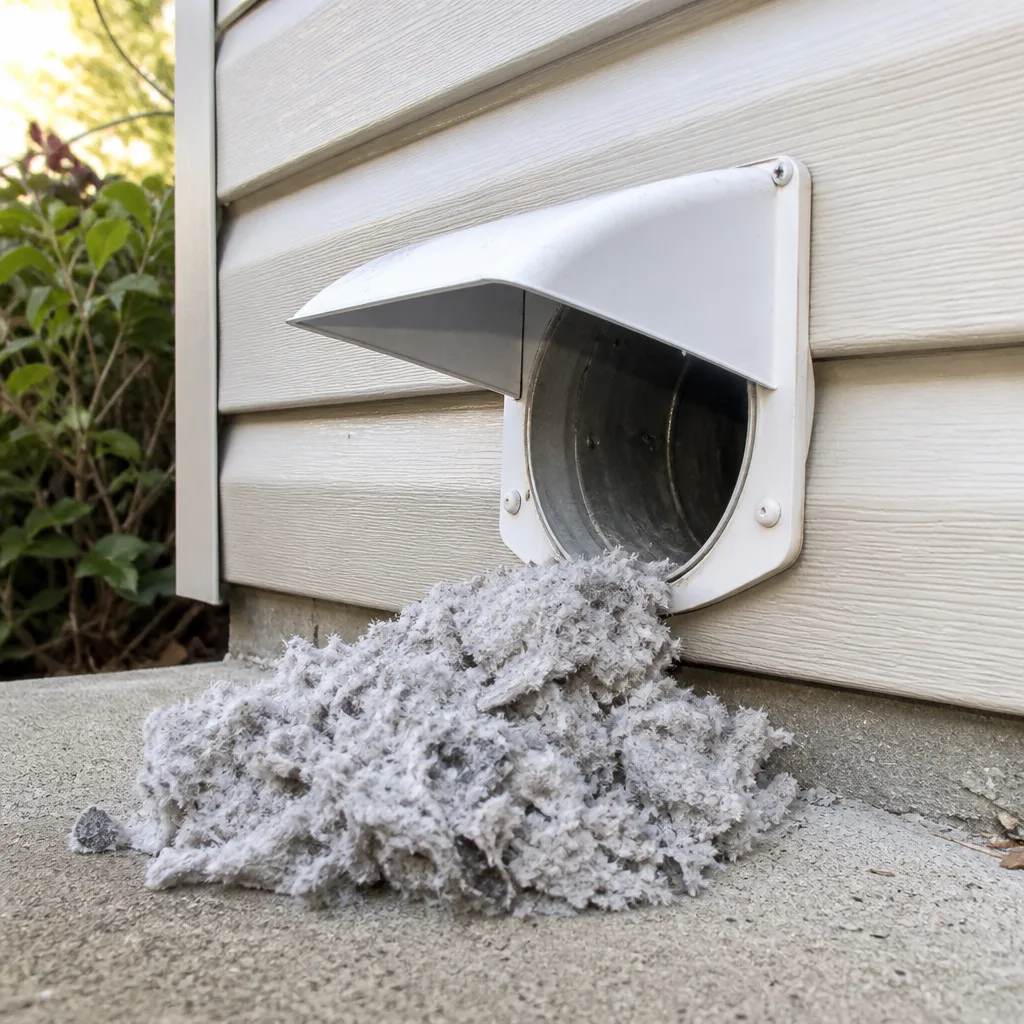 Dryer vent cleaning
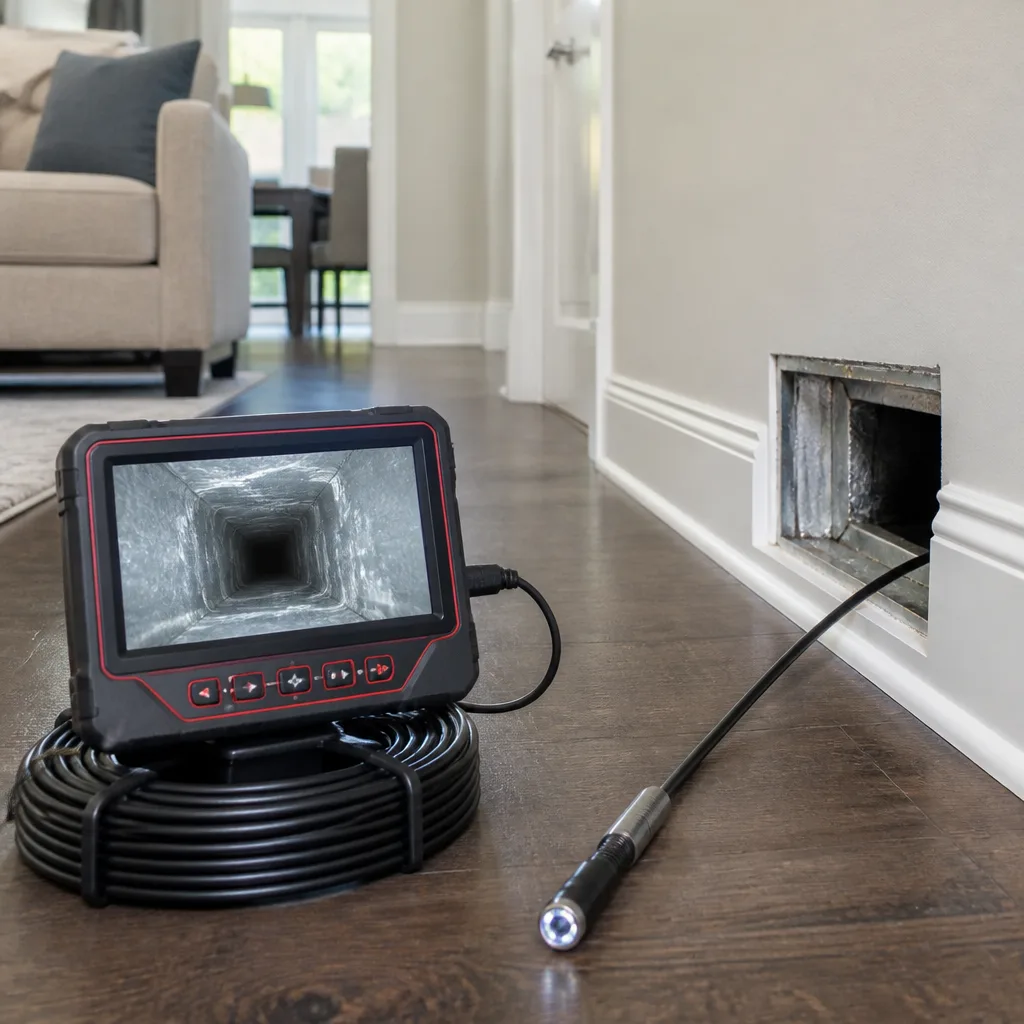 Camera inspection
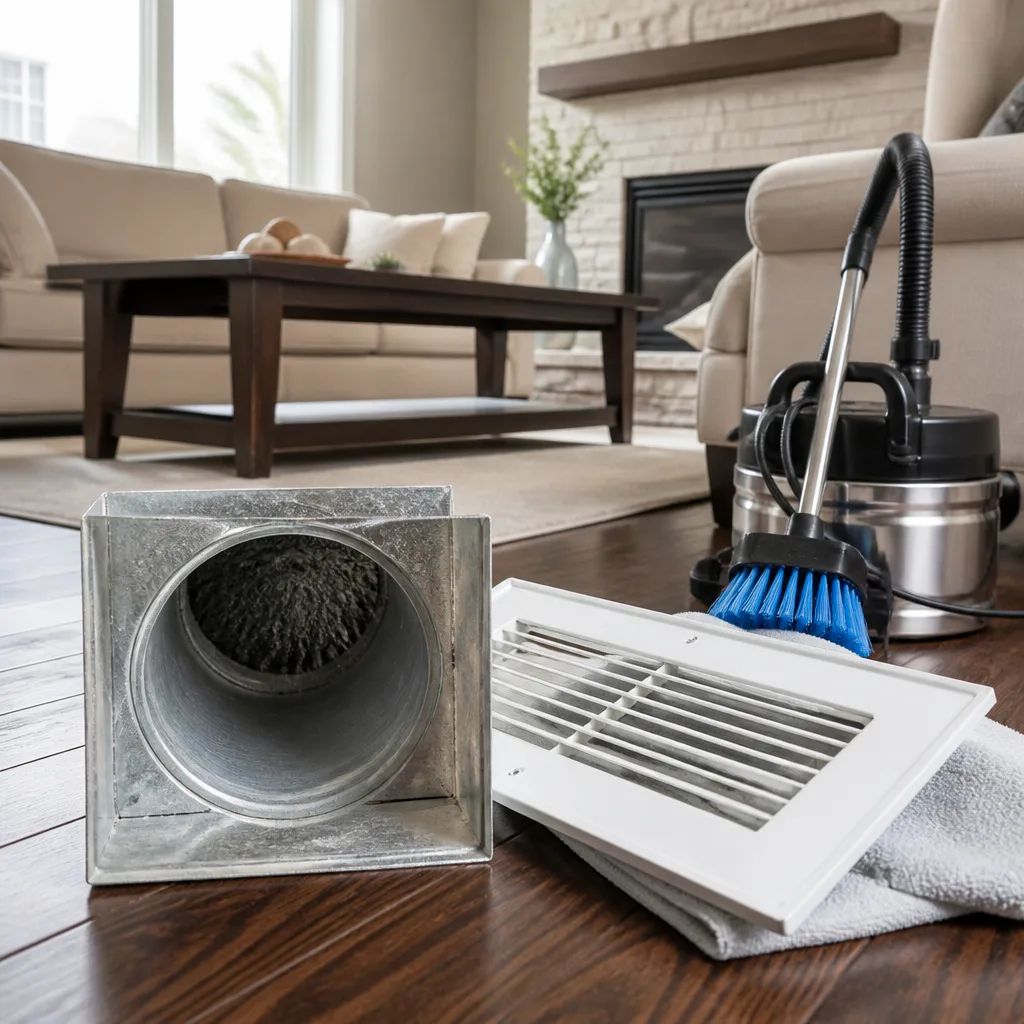 Sanitizing & deodorizing
Whole-system duct and dryer vent check with before-and-after photos - you see exactly what came out of your vents
That "$99 whole-house special" is a bait ad - the real number appears once they are in your hallway, or the "clean" is a shop-vac at the register. We photograph the inside of your ducts before and after instead.
DIY vs Professional Air Duct Cleaning: The San Jose Homeowner’s Decision Guide
Most San Jose homeowners don’t realize their HVAC system holds more surface area than their living room floor, and a shop vac reaches maybe 20% of it. The $45 brush kit seems like the smart play until you understand what actually lives inside duct runs that run through attics reaching 140°F in August. This guide breaks down exactly where DIY makes sense, where it backfires, and how to inspect your own system before spending a dollar either way.
Quick Answer
DIY air duct cleaning works for register-level maintenance and dryer vent upkeep, but it cannot replicate negative-air extraction that pulls 4,000+ CFM through sealed duct runs. For any situation involving contamination – rodent droppings, wildfire smoke, or visible mold – call a professional Air Duct Cleaning service with HEPA-filtered negative air equipment. The honest answer: DIY handles the visible 20%, but the hidden 80% is what actually affects your air quality.
Styles & brands we work with
Table of Contents
- What DIY Can Actually Reach
- Negative-Air Extraction Explained in Plain English
- Three Situations Where DIY Is Genuinely the Right Call
- Three Situations Where DIY Is Actively Counterproductive
- The True Cost Comparison: Tools, Time, and Risk
- How to Inspect Your Own Ducts Before Deciding
- San Jose-Specific Factors That Change the Math
- What Professional Equipment Actually Does
What DIY Can Actually Reach
If you remove a register cover and shine a flashlight into the opening, you can see roughly 18 to 24 inches of duct before the run bends out of view. That visible section, plus the register box itself, is what most DIY cleaning actually addresses. The typical San Jose home has duct runs stretching 15 to 45 feet through walls, floors, and attic spaces, with bends, transitions, and branch takeoffs that a consumer brush simply cannot navigate effectively.
A homeowner with a shop vac, a basic brush kit, and patience can genuinely clean:
- The back side of each register cover and the register boot immediately behind it
- The first 2 to 3 feet of straight duct run from each opening
- Visible dust accumulation on return grilles and the filter housing
- The area immediately around the air handler cabinet opening
That’s real work and it has value, especially as seasonal air duct cleaning care for San Jose maintenance between professional cleanings. But here’s the structural reality: most duct runs have multiple 90-degree elbows, and many San Jose homes built in the 1960s through 1990s have flex duct with internal ribbing that traps debris along its entire length. A straight brush on a fiberglass rod physically cannot follow those curves, and a shop vac’s suction drops dramatically beyond the first few feet. The result is a system that looks cleaner at the registers but carries the same accumulated load in the trunk lines.
We’ve walked through homes in Willow Glen and Almaden Valley where homeowners had done a thorough DIY pass the previous weekend, and our Rotobrush inspection camera still showed years of accumulated dust coating the main trunk. The visual improvement at registers creates what we call a false sense of completion – the accessible 20% looks better, so the inaccessible 80% gets ignored.
Negative-Air Extraction Explained in Plain English
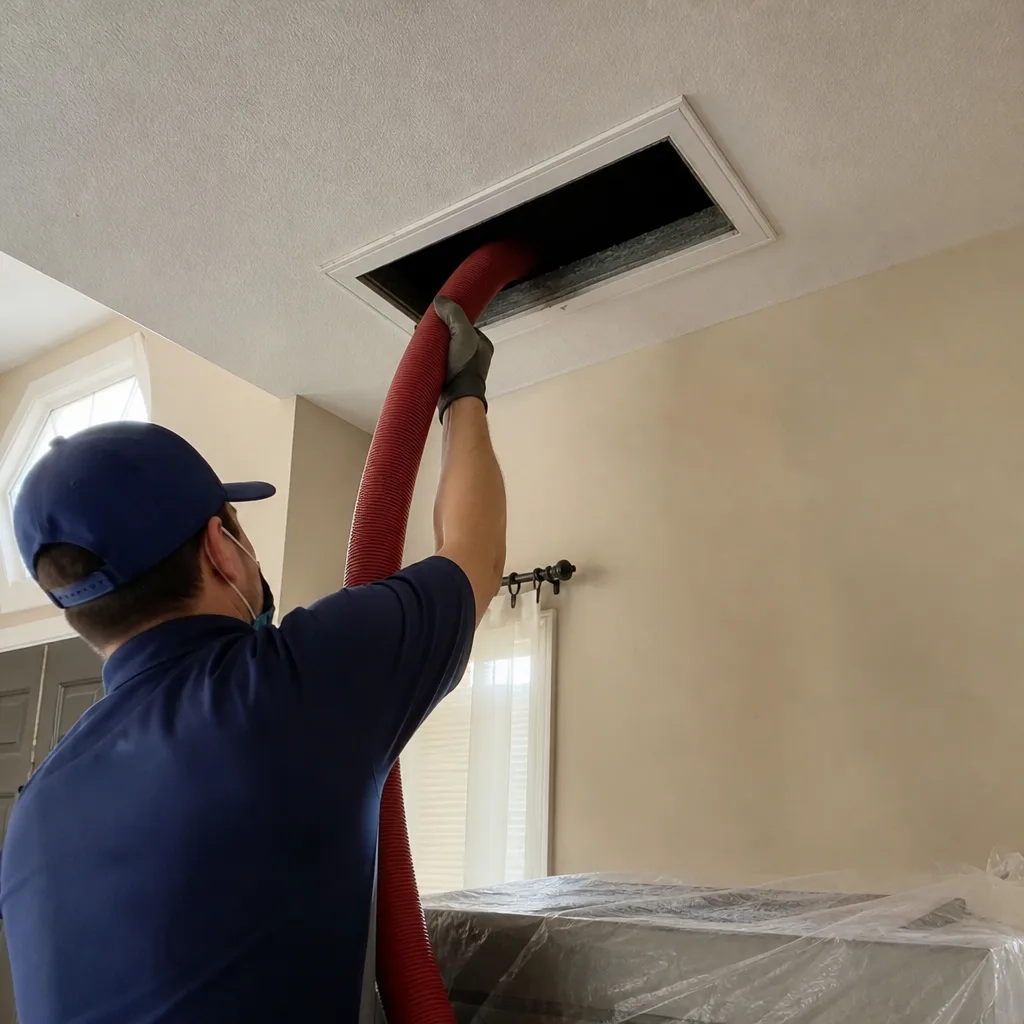
Professional air duct cleaning operates on a fundamentally different principle than a shop vac. Instead of pushing air into the duct and hoping debris follows, a negative-air machine creates a powerful vacuum at one end of the duct system while compressed air or brush agitation loosens debris at the other end. The debris has nowhere to go except into the vacuum collection chamber.
The numbers tell the story. A strong consumer shop vac might pull 150 to 200 CFM (cubic feet per minute) at the hose end. Professional negative-air units like the Nikro systems pull 4,000 CFM or more through the duct system. That’s a 20x difference, and it’s why professional cleaning captures debris rather than just relocating it.
Here’s the sequence a professional cleaning follows:
- Connect the negative-air unit to the main trunk line, creating a strong vacuum that places the entire duct system under negative pressure.
- Seal all registers except the one being actively cleaned, which prevents loosened debris from escaping into living spaces.
- Agitate the duct walls using a rotating brush system (like our Rotobrush equipment) that mechanically dislodges accumulated debris from duct walls.
- Extract the loosened material through the negative-air system, which carries it directly into a sealed collection chamber, often with HEPA filtration to prevent release.
- Shop vac with HEPA filter: $90 to $150 for a unit capable enough to do anything beyond surface dusting (standard shop vacs exhaust fine particles back into the room)
- Brush kit for ducts: $35 to $60 for a kit with flexible rods and multiple brush heads
- Inspection camera (to see what you’re actually doing): $40 to $80 for a smartphone-attachable borescope camera
- Time: a full-system DIY attempt takes 4 to 8 hours for a typical 3-bedroom San Jose home, requiring register removal, reach-cleaning at each opening, and replacement of every cover
- Complete air duct cleaning for a typical San Jose home: most homes run between $450 and $750 depending on system size, number of registers, and accessibility
- What’s included: full system negative-air extraction, brush agitation of all trunk lines and branches, HEPA filtration during cleaning, and – critically – verification that the entire system was actually cleaned, not just the visible portions
- Set up a video camera – most modern phones have built-in video recording. A selfie stick extends your reach so the phone can go into the duct several feet beyond the register opening.
- Choose a starting point – the return air register is usually the most telling location, because all the air from the house flows through it before entering the system. Start there.
- Remove the register cover – typically held in place by two screws or friction clips. Keep the screws somewhere safe.
- Insert phone and record slowly – move the phone into the duct, rotating slowly as you go. Go as far as the selfie stick allows, usually 2 to 3 feet.
- Repeat at the farthest register – the register farthest from the air handler typically shows the most accumulation because air velocity is lowest there.
- Review the footage – look for visible dust accumulation on duct walls, debris sitting in the bottom of ducts, or any signs of moisture staining or discoloration.
The key difference: a shop vac pushes air around inside the duct, and whatever it misses stays airborne in the duct or blows out the vent. Negative-air extraction pulls toward a single collection point, so loosened debris is actually removed from the system rather than shuffled around. For a San Jose homeowner with a two-story home and ducts running through inaccessible crawl spaces, this distinction determines whether the cleaning actually accomplishes anything beyond appearance.
Three Situations Where DIY Is Genuinely the Right Call
We’re not here to sell you a service call you don’t need. There are specific scenarios where a homeowner’s own effort is the appropriate level of intervention, and every San Jose homeowner should know what these are.
1. Single Register Cleaning Between Professional Services
When you notice one particular register accumulating visible dust while the rest look fine, that’s rarely a system-wide problem. It’s usually a localized buildup in the register boot or a slight imbalance in that branch run. Remove the register cover, vacuum out the visible section, wipe the cover, and you’ve addressed the issue. This is routine maintenance, not duct cleaning, and it takes 15 minutes.
2. Dryer Vent Maintenance
The $45 dryer vent brush kit referenced at the top of this guide works exactly as advertised for dryer vents. Dryer vents are relatively short, mostly straight runs with a single purpose: carrying lint and warm moist air outside. A homeowner with a drill-attached brush kit can clear a straightforward dryer vent run in under an hour. What the kit won’t do is clear the internal lint trap bypass area on the dryer itself, or identify partially disconnected fittings behind walls. If the vent run has multiple turns or the dryer is located on an interior wall far from an exterior wall, you’re better off scheduling dryer vent cleaning in San Jose and letting a professional camera verify the full length.
3. Post-Renovation Register Wipe-Down
After drywall work, sanding, or painting, dust settles everywhere – including inside register boots near the work area. A thorough wipe-down of all register covers and a vacuum pass on the accessible boot sections will remove renovation dust before it gets pulled deeper into the system. This should happen before you run the HVAC system following any renovation, and it’s genuinely effective for surface-level dust that hasn’t yet circulated.
These three scenarios share a common thread: they involve localized, visible, surface-level debris that a homeowner can reach directly. When the problem extends beyond arm’s reach or beyond a straight-line visual inspection, the DIY approach stops being maintenance and starts being theater.
Three Situations Where DIY Is Actively Counterproductive
There are times when attempting DIY duct cleaning actually makes the problem worse. Here are the three most significant scenarios we encounter in San Jose, and why a shop vac and brush kit are the wrong tools in each case.
1. Post-Rodent Contamination
If you’ve had rodents in your attic or crawl space – a common issue in San Jose’s older neighborhoods like Rose Garden and Naglee Park – the debris in your ducts isn’t just dust. Rodent droppings, urine residue, nesting material, and sometimes deceased animals can end up in duct runs. Attacking this with a shop vac stirs up potentially dangerous particles without capturing them. A shop vac without HEPA filtration exhausts fine particles back into the living space, which turns a contained problem into a respiratory exposure. Professional remediation requires negative-air containment, HEPA filtration, and in some cases duct replacement. This is not a cleanup job – it’s a contamination abatement.
2. Post-Wildfire Smoke Infiltration
San Jose sits in a fire-prone region. When wildfire smoke settles over the valley, your HVAC system pulls that particulate-laden air into the ductwork, especially if the system ran without a high-MERV filter during smoke events. Fine smoke particulates are microscopic – 2.5 microns or smaller – and they bond electrostatically to duct interiors. A brush kit doesn’t capture these particles; it dislodges them into the air where they recirculate through your home. Professional systems with true HEPA filtration, like the Abatement Technologies units used in fire restoration, are necessary to capture particulate this fine effectively. DIY effort here takes particulates that were stuck in place and puts them into your breathing air.
3. Mold-Suspect Ductwork
If you smell musty air when the HVAC system runs, see dark staining around register openings, or have a history of condensation issues in crawl spaces, DIY cleaning is the worst possible response. A brush kit will break up visible mold colonies and send spores throughout the home. Mold in ducts typically indicates a moisture problem that requires remediation beyond what any cleaning can address, but the first step is always assessment by someone who can distinguish mold from ordinary dust accumulation. Sticking a camera into the duct and guessing isn’t a reliable diagnostic method, and trying to clean mold without containing the affected area spreads the problem.
If your situation matches any of these three scenarios, the DIY question isn’t “can I do this?” but “what risk am I accepting by trying?” The answer in all three cases: you’re accepting a risk of redistributing contamination into the air your family breathes, which is the opposite of what duct cleaning is supposed to accomplish.
The True Cost Comparison: Tools, Time, and Risk
The most misleading question in this debate is “DIY costs $50 and professional cleaning costs $450, so DIY saves $400.” That framing ignores what you’re actually getting for each dollar. Here’s an honest accounting of what DIY actually costs in time, equipment, and uncaptured risk.
The DIY investment:
Total DIY investment: $165 to $290 in equipment plus the better part of a weekend. And at the end, you still haven’t touched the majority of the duct interior – you’ve done register-level maintenance and maybe cleaned a few feet of straight run at each opening.
The professional investment:
But the real cost comparison isn’t equipment versus service. It’s what happens when DIY disturbs settled debris without capturing it. That debris – years of accumulated dust, pet hair, dead skin cells, pollen, and whatever else has settled into the duct system – gets loosened and recirculated through your home. You breathe it in, it settles on every surface, and your HVAC filter captures some of it. The rest remains airborne until it settles back into the ducts. You haven’t cleaned anything; you’ve just moved it around your house.
For the San Jose homeowner deciding between these options, the question isn’t “which costs less?” but “what am I trying to accomplish?” If the goal is clean ducts, DIY register maintenance won’t achieve it. If the goal is register-level tidying between professional cleanings, DIY is perfectly reasonable. For how to hire a air duct cleaning contractor in San Jose, see our step-by-step guide.
How to Inspect Your Own Ducts Before Deciding
Before you spend money on professional cleaning or commit a weekend to DIY effort, you can gather real information about the state of your ducts with equipment you probably already own. A smartphone, a selfie stick, and 20 minutes will give you a much clearer picture than guessing based on visible dust at registers.
Here’s the inspection process, step by step:
What you see in that footage determines your next move. If you see light dust that’s uniform and not thick, your system is probably fine and register-level DIY maintenance is appropriate. If you see thick accumulation, visible debris, or any dark staining, you’re beyond DIY territory and should schedule a professional assessment.
This inspection costs nothing, takes under half an hour, and gives you real data instead of marketing-driven assumptions. It’s the same principle professional technicians use when they run inspection cameras through a system – except you’re using your phone and a selfie stick instead of a $5,000 borescope.
San Jose-Specific Factors That Change the Math
San Jose’s particular climate and housing stock create duct conditions that differ from what homeowners face elsewhere. Understanding these factors helps you make a smarter decision about whether DIY maintenance is sufficient or whether professional-level intervention is indicated.
First, San Jose’s dry summer months mean dust is perpetually airborne. The valley’s low humidity and prevailing winds carry fine particulate that finds its way into homes through every opening. Your HVAC system pulls this dust in through the return air, and it accumulates in ducts at a rate higher than what homeowners in more humid climates experience. That accumulation is fine – it’s what duct systems do – but it means ducts fill up faster here than elsewhere.
Second, many San Jose homes run HVAC systems more heavily during summer heat waves, when temperatures regularly exceed 90°F and sometimes approach 100°F for extended periods. Heavier system operation means more air moving through ducts, which means more particulate being filtered and more accumulation in the system. A duct system that runs 12 hours a day during July and August will accumulate more than one that cycles on and off.
Third, San Jose’s housing stock includes a significant number of homes built during the construction waves of the 1960s through 1990s. Many of these homes have original duct systems, or systems that have been patched and modified through decades of remodels. Older duct systems often have gaps, leaks, and poorly sealed connections that allow dust ingress from attics and crawl spaces. DIY register cleaning can’t identify or address these structural issues, which are the root cause of chronic dust accumulation.
Fourth, wildfire smoke exposure is a recurring reality in San Jose. Smoke events that last days or weeks leave residual particulate on every surface, including duct interiors. If your system ran during a smoke event without adequate filtration, the smoke residue is inside your ductwork, and only HEPA-filtered negative-air extraction will remove it.
These local factors don’t change the fundamental DIY-versus-professional calculus, but they do shift the frequency at which professional cleaning becomes necessary. In San Jose’s conditions, systems that might go five years between professional cleanings in other climates often need attention every two to three years.
What Professional Equipment Actually Does
Understanding what professional equipment does – in plain English, not industry jargon – helps you evaluate whether professional cleaning is worth the investment and what you should expect from a service provider.
Our technicians at Kestrel Air Duct San Jose home use three primary types of equipment, each with a specific purpose:
The Rotobrush system is exactly what it sounds like: a rotating brush that spins inside the duct, physically dislodging accumulated dust and debris from duct walls. Think of it like a giant drill-mounted bottle brush that scrubs the interior surface. Without this agitation, debris sticks to duct walls despite airflow or vacuum. With it, material that has been adhered for years gets physically removed.
The Nikro negative-pressure units create the strong vacuum that pulls loosened debris out of the duct system. These units connect to the main trunk line and maintain suction powerful enough that air moves rapidly through the entire duct system toward the collection point. This ensures that everything the brush loosens gets extracted, not blown into other rooms.
Abatement Technologies HEPA filtration captures the fine particles that negative-air extraction pulls out of the ducts, preventing them from being exhausted into the home or the surrounding environment. This matters for the fine particulate – smoke particles, mold spores, dust mite fragments – that ordinary filters miss.
If you’re looking at filtration products to maintain clean air between professional cleanings, we work with Aprilaire and Guardsman products. These are installed at the filter housing or the air handler, not inside the ducts, and they provide ongoing filtration that extends the interval between professional cleanings. A quality media filter from these manufacturers catches much of the particulate that would otherwise accumulate in your duct system.
The practical difference between this equipment and a shop vac: a shop vac pulls air from wherever its hose happens to reach. Professional equipment places the entire duct system under negative pressure, scrubs the interior surfaces while under vacuum, and contains the extracted debris in a filtered collection chamber. The result is a full-system cleaning, not a localized vacuuming.
Common Mistakes to Avoid
- Using a leaf blower to “blow out” the ducts. This is the single worst DIY approach we’ve seen in San Jose homes. It dislodges everything and captures nothing, redistributing years of accumulated dust throughout the house in one spectacular cloud. Repairs and thorough cleaning after a leaf blower incident typically cost more than a professional cleaning would have in the first place.
- Running the HVAC system to “air out” the ducts after DIY cleaning. This distributes any loosened debris through the entire living space. If you’ve been brushing inside ducts, leave the system off until you’ve vacuumed thoroughly at every opening.
- Assuming visible register dust indicates a dirty system. Register dust is normal and frequently just means the register cover needs a wipedown. The condition of the duct interior is what matters, and you can’t assess that without a camera.
- Ignoring the return side of the system. DIY efforts typically focus on supply registers because they’re visible. The return side carries all the house air into the system and often has heavier accumulation. Check the return register first, not last.
- Using the wrong filter during and after cleaning. A standard fiberglass filter catches very little. During any DIY work, upgrade to a MERV 8 or higher pleated filter to catch whatever your efforts dislodge. Continue using an appropriate filter permanently – not just for temporary comfort, but for ongoing system performance.
- Attempting to clean ductwork with a wet/dry vac in “wet” mode. Introducing moisture into ducts is a recipe for mold growth. Duct systems are not designed to be wet, and San Jose’s warm climate means any trapped moisture creates conditions that encourage biological growth. Ducts should always be cleaned dry.
- Skipping the inspection step entirely. If you’ve decided to DIY based on visible register dust without ever looking inside the ducts, you’re making a decision without information. The smartphone inspection described above takes 20 minutes and tells you what you’re actually dealing with.
See the difference
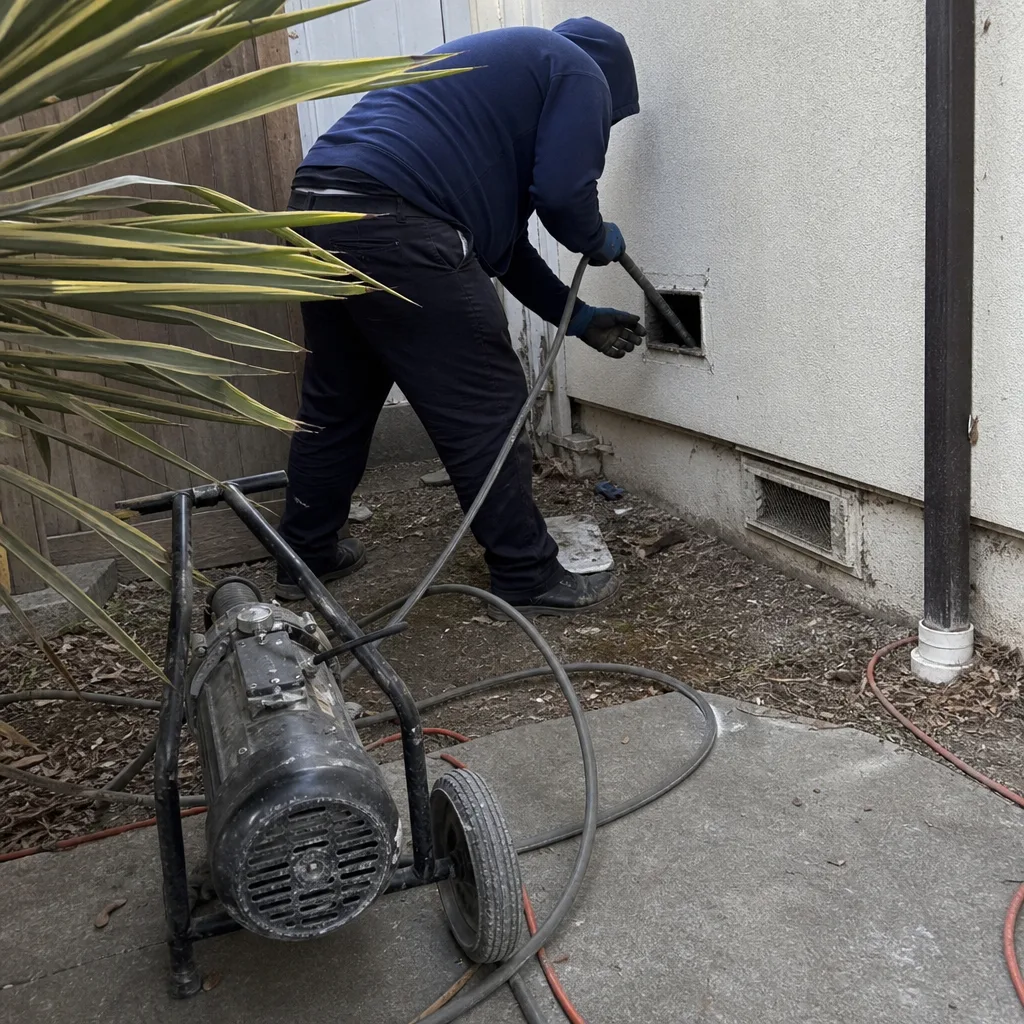 Before
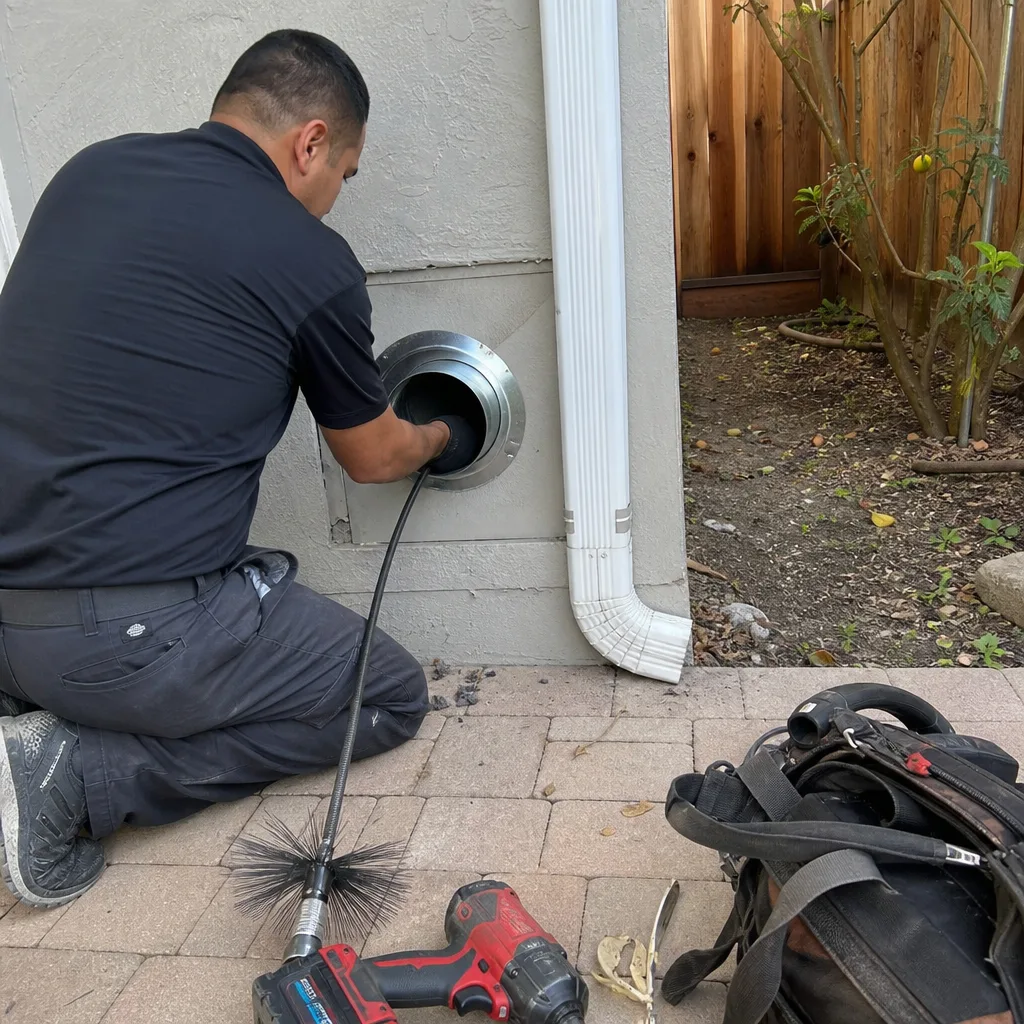 After
After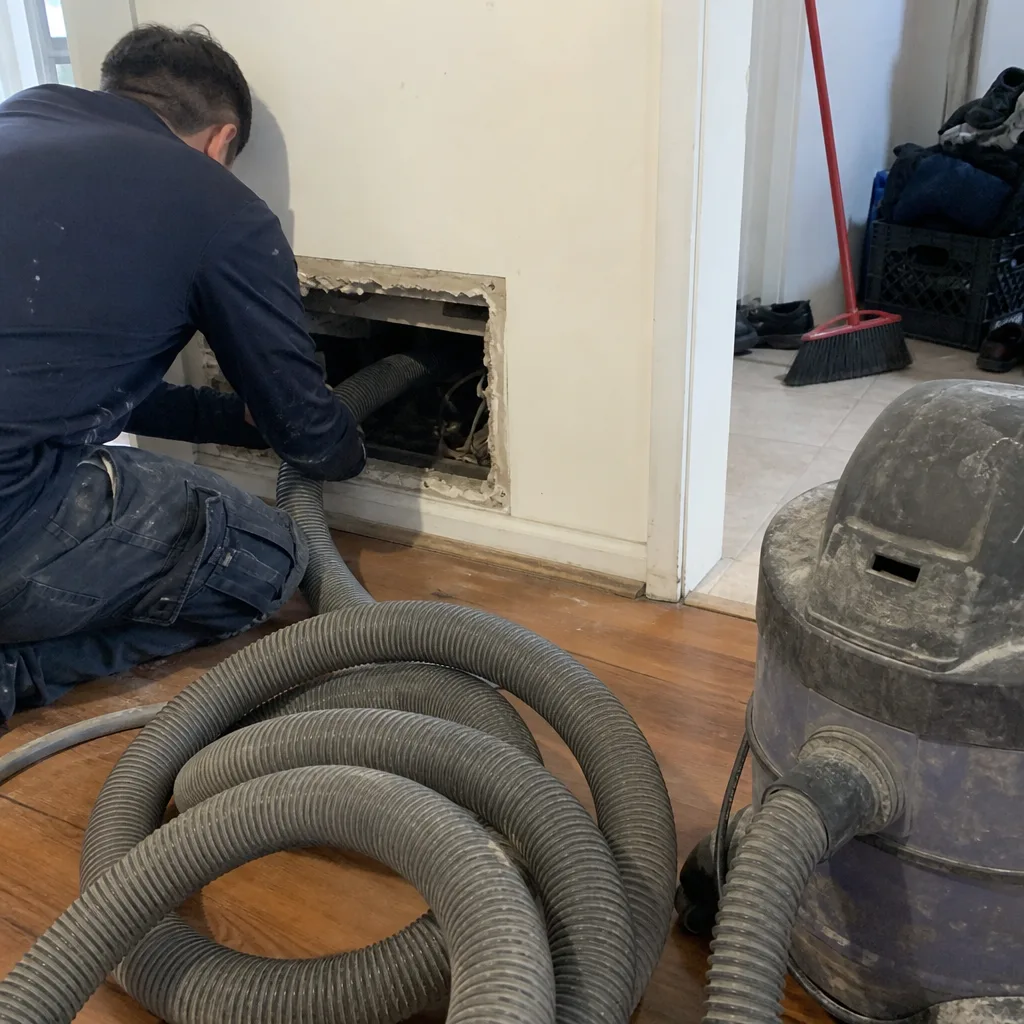 Before
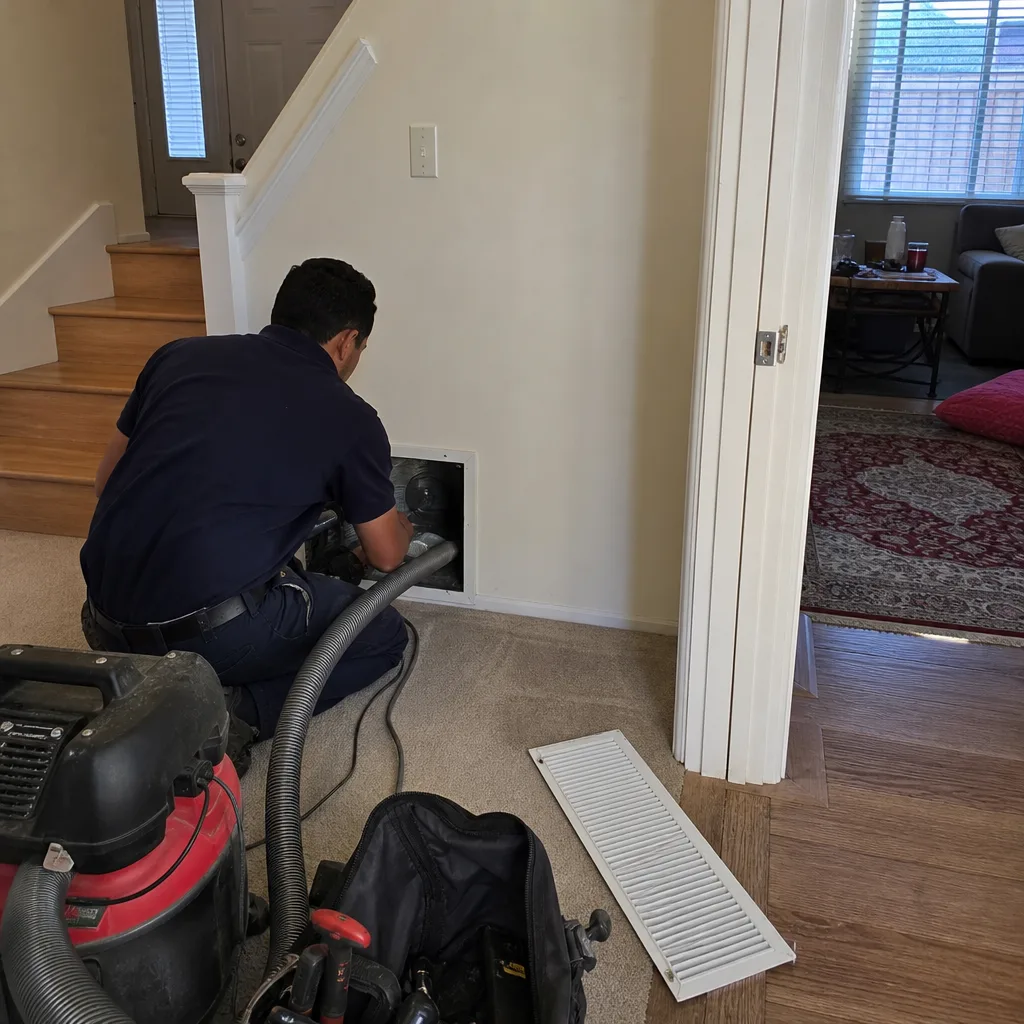 After
After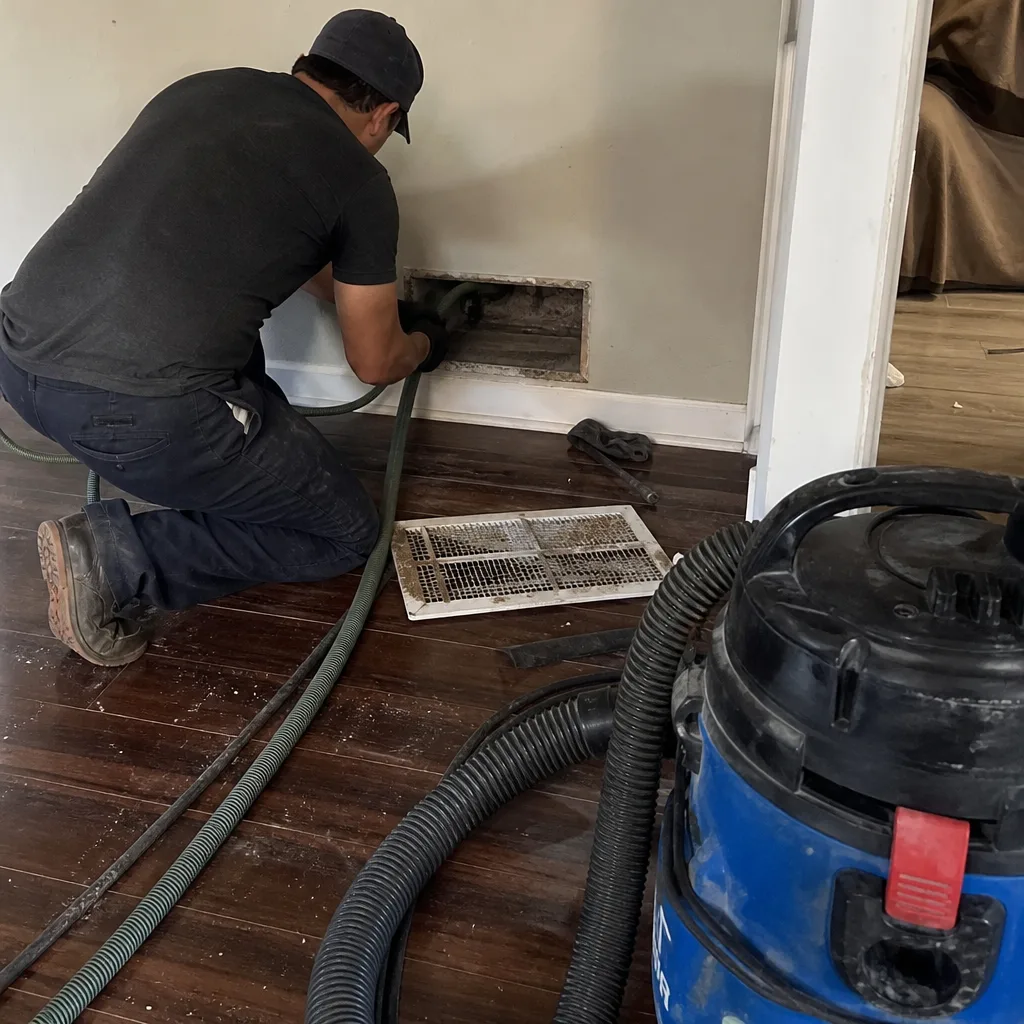 Before
 After
AfterWhen to Call a Professional
You should schedule air duct cleaning in San Jose when your smartphone inspection shows thick accumulation, when you’ve had rodents or other pests in attic or crawl space areas, when your system ran through wildfire smoke without adequate filtration, when you smell persistent musty odors when the system runs, or when it’s been more than three years since the last professional cleaning and you’ve never had one done. These scenarios all exceed what consumer tools can address. Kestrel Air Duct San Jose offers free estimates throughout San Jose, and our technicians can inspect your system before recommending any work. Call (669) 220-7869 to schedule an assessment.
Frequently Asked Questions
Professional air duct cleaning in San Jose typically costs between $450 and $750 for a standard 3-bedroom home, depending on system size, number of registers, and accessibility. Kestrel Air Duct San Jose provides a written price before any work begins, so the quote on paper is the price you’ll pay. Call (669) 220-7869 for a free estimate specific to your home.
You can clean register-level areas and accessible duct openings with a shop vac, but this addresses roughly 20% of the duct system’s interior surface area. The remaining 80% – trunk lines, branch runs, elbows, and transitions – requires negative-air extraction equipment pulling 4,000+ CFM to capture dislodged debris rather than redistributing it through your home.
In San Jose’s dry, dusty climate, most homes benefit from professional air duct cleaning every 2 to 3 years. Homes with pets, recent renovations, prior rodent issues, or exposure to wildfire smoke may need more frequent attention. Between professional cleanings, register-level DIY maintenance helps keep visible dust at bay. For more guides & resources on maintaining your home’s air quality, visit our blog.
Quotes below roughly $300 for a full system cleaning typically reflect limited scope: a limited number of registers, no trunk line access, or a service model that plans to upsell during the visit. A legitimate professional cleaning with negative-air extraction, brush agitation, and HEPA filtration on a full system can’t be delivered for a $99 coupon price – that’s a door-opener, not an honest quote. The written quote from Kestrel Air Duct San Jose is the full price, and it doesn’t change at the door.
Ask for before-and-after photos from inside the ducts, not just at register openings. Any professional service using inspection cameras can document the condition before cleaning and verify the results afterward. The Kingswell Guarantee, which backs every Kestrel Air Duct San Jose job, includes a 365-Day Done Right Promise: if the work falls short within that period, we return and make it right at no charge.
Cleaning removes the accumulated particulate that recirculates through your home, which can reduce allergen load. However, ongoing filtration matters as much or more than periodic cleaning. We work with Aprilaire and Guardsman filtration products that provide continuous capture of allergens between professional cleanings. For San Jose homeowners managing seasonal allergies, the combination of professional cleaning and quality filtration typically produces the most noticeable improvement.
A full system cleaning for a typical San Jose home takes 3 to 5 hours, depending on system size and accessibility. The process involves connecting negative-air equipment, sealing registers, mechanically agitating duct interiors, and verifying the result. It’s a scheduled service, not an emergency call – we arrange a defined arrival window and stick to it.
The Bottom Line
DIY air duct cleaning has a legitimate place in home maintenance: register wiping, dryer vent clearing, and post-renovation dust control are all reasonable homeowner tasks. What DIY can’t do is reach the majority of your duct system’s interior surface, capture the debris it dislodges, or safely address contamination from rodents, smoke, or mold. In San Jose’s dusty, dry climate, professional negative-air cleaning every 2 to 3 years – with DIY register maintenance in between – is the combination that keeps your system genuinely clean rather than just visually acceptable. The free estimate from Kestrel Air Duct San Jose includes an inspection, so you’ll know exactly what your ducts look like before deciding. Call (669) 220-7869 to schedule yours.
Written by Dale Whitmore, Owner at Kestrel Air Duct San Jose, serving San Jose since 2004.