
Last updated October 15, 2026
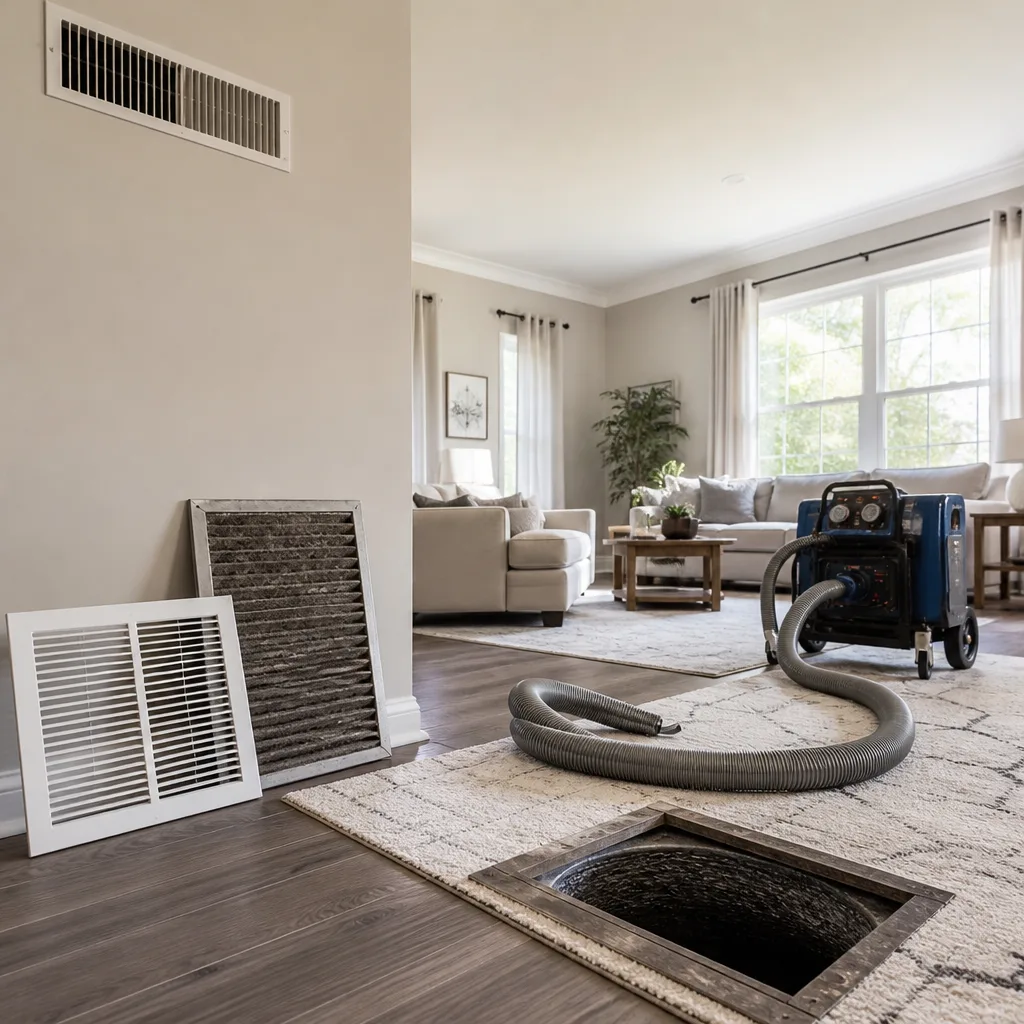 Whole-home duct cleaning
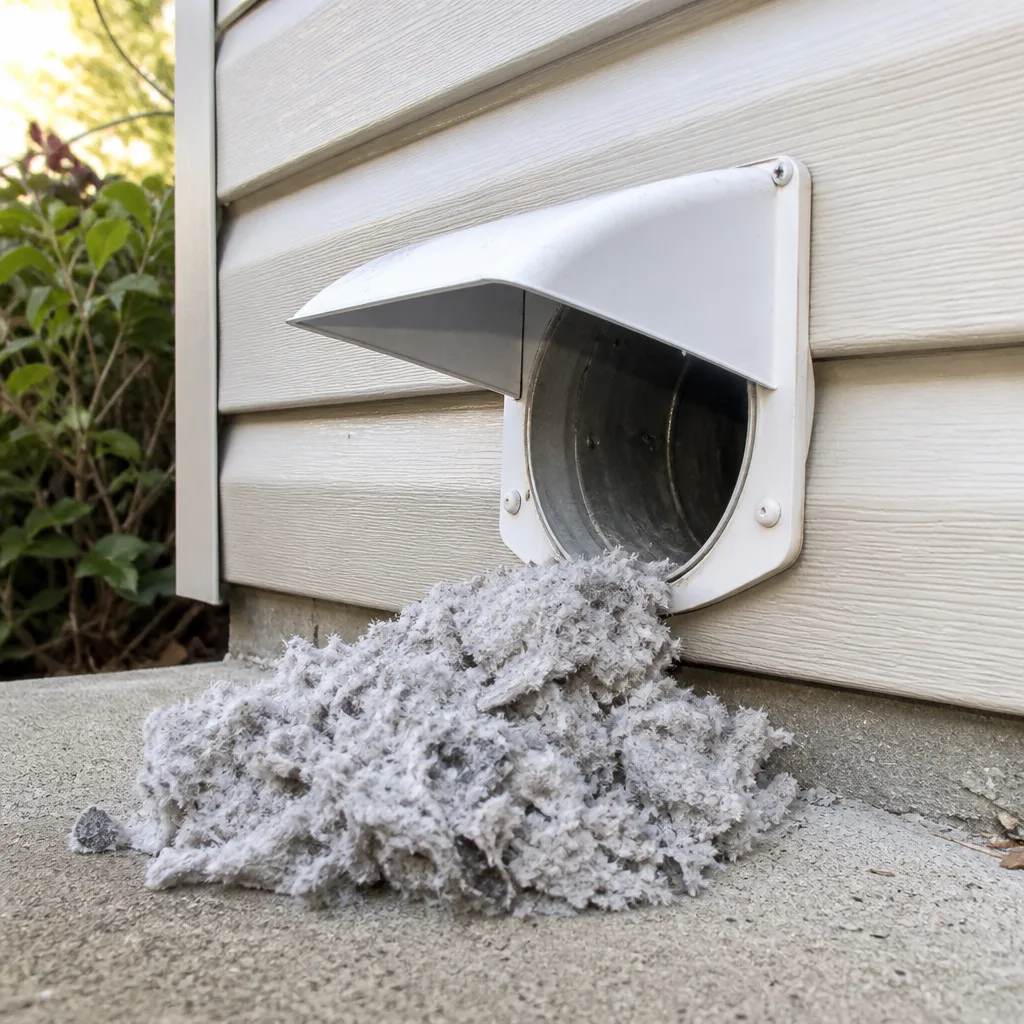 Dryer vent cleaning
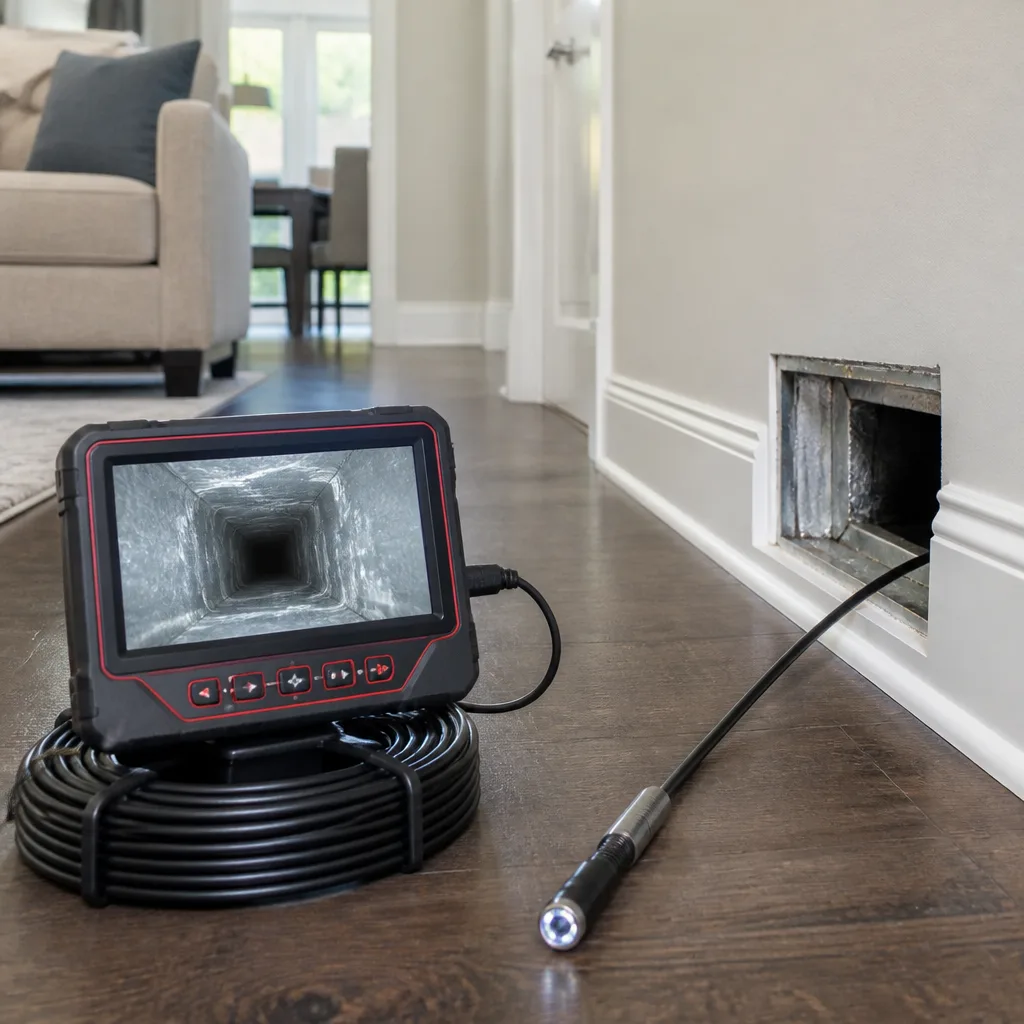 Camera inspection
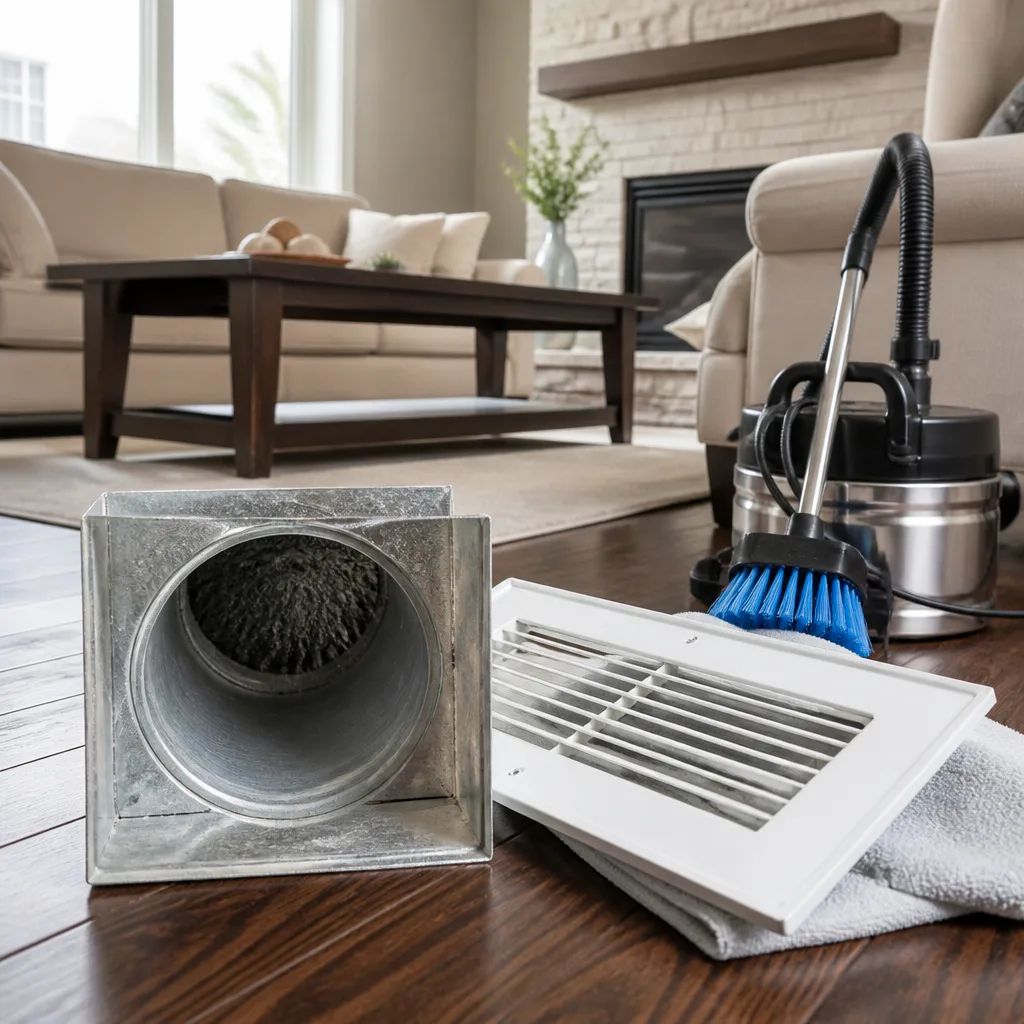 Sanitizing & deodorizing
Whole-system duct and dryer vent check with before-and-after photos - you see exactly what came out of your vents
That "$99 whole-house special" is a bait ad - the real number appears once they are in your hallway, or the "clean" is a shop-vac at the register. We photograph the inside of your ducts before and after instead.
Seasonal Air Duct Cleaning Care for San Jose: Year-Round Homeowner’s Guide
Most national duct-cleaning guides assume four seasons: cold winters, wet springs, hot summers, crisp autumns. San Jose doesn’t work that way. Our weather swings between a long dry season and a short wet one, with two far more dangerous wildcards layered on top: autumn wildfire smoke and spring pollen bursts. A homeowner who cleaned ducts in January, following generic “winter prep” advice, often found those same ducts loaded with Diablo-wind particulate by October, when Bay Area Air Quality Management District monitors regularly push into “unhealthy for sensitive groups” territory. This guide maps duct care to San Jose’s actual air-quality calendar, so you’re cleaning when it matters, not when a national checklist says so.
Quick Answer
The highest-impact duct-cleaning window in San Jose is late October through November, after the first Diablo wind events have pushed wildfire smoke and fine particulate through forced-air systems. For most San Jose homes, an inspection or cleaning once every 3 to 5 years is adequate, but that timeline shortens to every 2 to 3 years if you live within a half-mile of freeways 101, 280, or 87, or if anyone in the house has asthma or serious allergies. Replacing your HVAC filter within 72 hours after every Spare the Air Day does more to reduce ongoing duct contamination than any Air Duct Cleaning services schedule.
Styles & brands we work with
Table of Contents
- The Real San Jose Air Quality Calendar
- Why Late October Through November Is the Highest-Impact Cleaning Window
- How the Dry Season Affects Your Ducts Before You Ever See Smoke
- The Filter Rule: 72 Hours After a Spare the Air Day
- Freeway Proximity and How It Changes Your Schedule
- Spring Pollen in San Jose: A Secondary but Real Trigger
- What an Air Duct Cleaning Actually Does, Step by Step
- What You Can Safely Do Yourself and What Needs a Professional
The Real San Jose Air Quality Calendar
San Jose sits in the Santa Clara Valley, hemmed in by the Diablo Range to the east and the Santa Cruz Mountains to the west. That geography traps air. When high pressure settles over the valley in summer and fall, pollutants from traffic, industry, and occasional wildfires don’t blow away, they sit. The Bay Area Air Quality Management District tracks this in real time, and the pattern is consistent: the worst particulate readings in San Jose cluster in two bands. The first runs from late July through early October, when wildfire smoke from California and Oregon drifts into the valley and lingers under inversion layers. The second is late May through June, when grass and tree pollen counts spike and combine with the first heat waves to drive particulate levels up. A January duct cleaning addresses neither of these peaks.
What this means practically: if you’re going to clean your ducts, aim for the window just after the year’s worst particulate event, not before it. Cleaning in late October or November removes the residue of the entire wildfire season at once. Cleaning in January leaves that residue in place for another ten months, baking into duct surfaces through the dry season, breaking down into finer particles that recirculate every time the blower runs. The timing isn’t a minor adjustment. It’s the difference between cleaning that holds up and cleaning that’s undone within weeks.
San Jose Particulate Calendar at a Glance
- November through February: Wet season. Outdoor particulate generally lower. Best time for indoor-source dust management. Duct cleaning effective if you missed the fall window.
- March through April: Transitional. Rain tapers, winds shift. Pollen from oaks, sycamores, and grasses begins climbing. Change filters monthly. Good time for a visual duct inspection.
- May through June: First particulate peak. High pollen counts combine with rising ozone. Spare the Air Days begin appearing. Change filters every 30 days. If allergies are flaring, consider a duct inspection rather than waiting.
- July through September: Dry season settles in. Fine dust from construction, dry soil, and traffic builds up. Wildfire risk rises. Monitor BAAQMD alerts. Keep a spare filter on hand.
- October through November: Diablo wind season. Peak wildfire smoke risk. The single best time for a full duct cleaning in San Jose. Schedule before Thanksgiving.
Why Late October Through November Is the Highest-Impact Cleaning Window
Diablo winds are the defining air-quality event of a San Jose autumn. They blow from the northeast, off the Sacramento Valley, picking up speed and heat as they compress over the coastal ranges. When wildfires are active, those winds push smoke directly into the Santa Clara Valley. The particulate in that smoke is fine enough to pass through most household filters with ease: PM2.5 particles measure 2.5 microns or smaller, roughly thirty times thinner than a human hair. They don’t just settle on visible surfaces. They penetrate deep into duct runs, cling to damp coil surfaces, and embed themselves in fiberglass duct liner. Once embedded, they release gradually over months, which means your indoor air quality can stay degraded long after the outdoor AQI has cleared.
Cleaning in the weeks after the first significant smoke events removes that particulate before it has time to compact and bind with the moisture that arrives with early winter rains. Once wet-season humidity enters the ducts, what was loose soot becomes a paste. It adheres to duct walls, resists standard brush agitation, and creates exactly the kind of organic-rich surface where dust mites and mold thrive in the months that follow.
We’ve cleaned ducts throughout San Jose, including homes in Willow Glen, Almaden Valley, and Berryessa, and the pattern holds: systems cleaned in November stay measurably cleaner through the following summer than systems cleaned in spring, because they’re not carrying a fresh load of wildfire particulate into the dry season from day one. Late October through Thanksgiving is not a scheduling preference. It’s a risk-management decision based on how San Jose’s air actually behaves.
If you need the work done before the holidays or before relocating into a new home, Air Duct Cleaning in San Jose is a service we schedule around the fall window whenever possible, and we’ll explain exactly why the timing matters during the estimate.
How the Dry Season Affects Your Ducts Before You Ever See Smoke
San Jose’s dry season runs roughly from May through September, with almost no measurable rain and daytime temperatures routinely climbing into the 80s and 90s. That heat does specific things to the materials inside your HVAC system, and a fall inspection should be looking for them. Flex duct, the flexible, insulated tubing used in many attic and crawlspace runs, is the most vulnerable component. Prolonged heat degrades the outer vapor barrier and the inner plastic liner. The liner becomes brittle. The joints where flex duct connects to rigid duct or to register boots can loosen as the materials expand and contract through daily temperature cycles. What was a tight connection in April can be a small separation by September.
Those separations matter for two reasons. First, they draw attic air into the return stream, which means the system is pulling 130-degree air from the attic into your living space. The system has to work harder to cool it, and it carries whatever is in the attic air, including insulation fibers, dust, and rodent droppings, directly into the duct run. Second, they allow conditioned air to escape into the attic before it reaches the registers. You’re paying to cool an unoccupied space. A fall duct inspection in San Jose should always include checking the integrity of flex duct joints, because summer heat is hardest on those connections. This isn’t a speculative concern. It’s something our technicians check on every cleaning, and one of the reasons we specify what the inspection covers before work begins, in writing, as the Kingswell Guarantee requires.
Dry-season dust is also finer than wet-season dust. With no rain to settle it, construction dust from all the infill projects across San Jose, pollen from ornamental landscaping, and tire-wear particulate from surface streets stay airborne longer. That fine dust is exactly the particle size that makes it through a basic fiberglass filter and into the duct run. It accumulates slowly, coats the blower motor and the evaporator coil, and reduces system efficiency. When you combine six months of fine dust accumulation with the autumn smoke load that follows, you have a system that needs a thorough cleaning by November, not a light inspection.
The Filter Rule: 72 Hours After a Spare the Air Day
If you do nothing else on this page, do this: when the Bay Area Air Quality Management District declares a Spare the Air Day for smoke or ozone, replace your HVAC filter within 72 hours of the alert ending. This single habit reduces duct contamination over time more effectively than any annual cleaning, and it’s nearly free. During a smoke event, your filter captures a disproportionate share of the particulate that would otherwise enter the duct run. By the time the alert clears, that filter is loaded. If you leave it in place, two things happen. The loaded filter restricts airflow, forcing the blower motor to work harder against resistance, which shortens motor life. And the captured particulate doesn’t stay captured forever; as the filter media flexes under airflow, captured particles release back into the airstream and distribute into your ducts.
Homes in San Jose with upgraded filtration, including Honeywell and Aprilaire media filters, have a real advantage during smoke season. These systems use deeper pleated media with more surface area than a standard one-inch filter, so they capture more particulate before airflow restriction becomes a problem. However, even the highest-grade media filter reaches saturation during a sustained smoke event, so the 72-hour replacement rule still applies. If you’re running a Guardsman filtration product, the same discipline applies: check the filter after every Spare the Air Day, and replace or clean it per the manufacturer’s instructions within three days of the alert clearing.
Here’s the sequence we recommend for every San Jose household during smoke season:
- Bookmark or enable alerts from the BAAQMD website so you know when a Spare the Air Day is declared.
- When an alert is active, run the HVAC fan continuously if possible. This pushes air through the filter repeatedly, capturing smoke particles before they settle in the duct run.
- Note the date and time the alert clears.
- Within 72 hours, inspect the filter. If it’s visibly loaded, replace it.
- If you had back-to-back alerts or a multi-day event, replace the filter even if it doesn’t look heavily loaded. Fine smoke particulate doesn’t always discolor the media dramatically.
- After the smoke season ends, schedule a duct inspection or cleaning to remove any particulate that bypassed or outlasted your filters.
This routine is simple, but it changes the math on how often you need professional duct cleaning. A home that follows the 72-hour rule religiously will accumulate far less smoke residue in the duct run in the first place. The professional cleaning becomes less about emergency remediation and more about long-term maintenance.
Freeway Proximity and How It Changes Your Schedule
Where you live in San Jose matters as much as how you maintain your filters. Traffic particulate behaves differently from wildfire smoke. It’s heavier. It’s composed of tire dust, brake pad material, diesel soot, and road-surface abrasion. And it doesn’t travel far. Studies of freeway-adjacent neighborhoods consistently show that particulate concentrations drop sharply within 300 to 500 meters of the roadway. If your home sits within about a half-mile of 101, 280, 87, or a major arterial like Almaden Expressway or Capitol Expressway, your ducts are accumulating particulate at a meaningfully higher rate than a home in the foothills.
Traffic particulate is also stickier than smoke. Brake dust contains heavy metals and carbonized organic compounds that adhere to duct surfaces and don’t blow through the way fine wildfire ash does. Once it settles, it builds up in layers, particularly in the first 10 to 15 feet of duct run after the air handler and in the boots beneath registers. This is not a hypothetical. We’ve cleaned systems in homes near the 280/87 interchange that held two to three times the debris load of comparable homes in Almaden, and the composition was visibly different: dark, granular, and greasy, rather than the fine gray dust common in hillside homes.
The practical takeaway is that freeway-adjacent homes should not follow a generic five-year duct-cleaning interval. Here’s the adjustment we recommend for San Jose specifically:
- Within a half-mile of 101, 280, or 87: Inspection or cleaning every 2 to 3 years, with a strong preference for the fall window.
- More than a half-mile but within two miles of a freeway: Cleaning every 3 to 4 years, with annual filter checks and replacements in place.
- Foothill and hillside areas, including Almaden Valley and Evergreen edge neighborhoods: Cleaning every 4 to 5 years, unless wildfire smoke exposure or allergy symptoms suggest earlier.
- Homes with dogs or cats plus freeway proximity: The two factors compound. Pet dander is sticky and combines with traffic particulate to create dense matting inside ducts. Lean toward the 2-year interval.
If you’re unsure which category you fall into, think about your windowsills. If they show visible dark dust within a week of cleaning, your home is taking in traffic particulate. That same dust is entering your return registers and duct run every time you run the system.
Spring Pollen in San Jose: A Secondary but Real Trigger
San Jose’s spring pollen season runs earlier and heavier than many homeowners expect. Oak pollen peaks in March and April. Grass pollen follows in May and June. Sycamore, olive, and mulberry trees, all common in San Jose landscaping, add to the load. For anyone with seasonal allergies, the pollen circulating through a forced-air system is a serious quality-of-life issue, and ducts play a role in that exposure. Pollen that enters the return side of the system can accumulate in the duct run and release gradually over weeks, extending the allergy season well past its outdoor peak.
Spring is not, however, the ideal time for a full duct cleaning in San Jose. Cleaning in March or April addresses pollen but leaves the system open to six months of dry-season dust and autumn smoke. That said, there are scenarios where a spring cleaning makes sense. If you’ve moved into a home with unknown maintenance history and visible debris at the registers, clean them now regardless of season. If a household member has severe pollen allergies and you’ve already installed high-MERV filtration with no relief, a spring cleaning can remove years of accumulated pollen and dust that no filter change can touch.
The smarter spring move for most San Jose homeowners is inspection plus improved filtration. A visual inspection of the return side, the blower compartment, and the accessible duct run will show whether pollen and dust are accumulating. Upgrading from a basic fiberglass filter to a Honeywell or Aprilaire media filter, or adding a Guardsman filtration product, addresses the source of allergy exposure more effectively than cleaning alone, because filtration works continuously while cleaning is a point-in-time event. If the inspection shows heavy accumulation, then a spring cleaning is warranted. If not, bank the budget toward the fall window.
What an Air Duct Cleaning Actually Does, Step by Step
If you’ve never had ducts cleaned, the process can sound vague, and that vagueness is exactly what lets low-integrity contractors exploit homeowners with bait-and-switch pricing. Here’s the honest, step-by-step version of what a proper cleaning involves, using the equipment and methods we use on every San Jose job.
- Inspection and written price. Before any work starts, the technician inspects the system, shows you what’s in the duct run, and gives you a written price in dollars. That number doesn’t change at the door. Under the Kingswell Guarantee, this is a standing commitment, not a promotional offer.
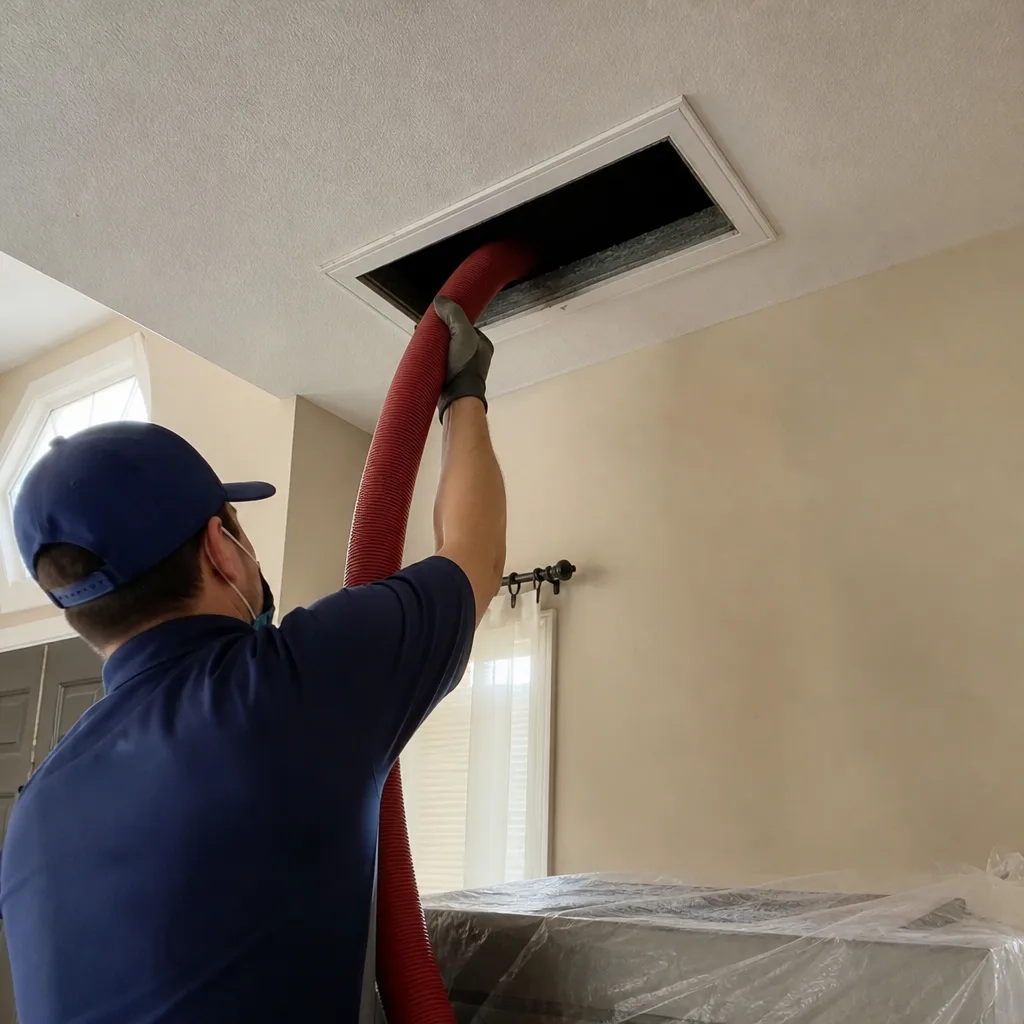
- Negative-pressure containment. The technician connects a Nikro negative-air unit to the duct system. Negative-pressure extraction means the system pulls air from the ducts into a HEPA-filtered collection unit, so debris is drawn out of the registers rather than blown back into the living space. The plain-English version: the machine creates a vacuum on your duct run and captures what it pulls out.
- Brush agitation. With the negative-air unit running, the technician feeds a Rotobrush rotary brush system through each duct run. Brush agitation means physically scrubbing the duct walls to dislodge caked-on dust, hair, pollen, and smoke residue. The brush breaks the debris loose from the surface; the negative air pulls it immediately into the collection unit before it can resettle.
- Return and supply run cleaning. Both sides of the system get cleaned. The return side carries air from the house to the air handler and typically holds the most debris. The supply side carries conditioned air back to the rooms. Both need to be cleared for the system to run clean.
- Blower compartment and coil inspection. The blower motor and, where accessible, the evaporator coil are inspected. If dust and debris have accumulated on the blower wheel, it gets cleaned as part of the job. A dirty blower wheel reduces airflow and efficiency even in a clean duct run.
- Final walkthrough. The technician shows you the before-and-after of the work, explains what was removed, and leaves the access points sealed and the site clean. The Kingswell Way says leave the place cleaner than we found it, and that applies to every visit, no exceptions.
The entire process for a typical single-family San Jose home takes 3 to 5 hours, depending on the number of registers and the condition of the system. The price is agreed before work starts, covers the whole system, and doesn’t change based on what’s found inside the ducts. Most San Jose homes run between $450 and $900 for a full-system duct cleaning, with larger homes or heavily loaded systems at the upper end of that range. For details on what drives those numbers, see our Air Duct Cleaning Cost Breakdown: The San Jose Homeowner’s Reference for 2026.
What You Can Safely Do Yourself and What Needs a Professional
There’s a meaningful distinction between maintenance and cleaning. Maintenance is within reach of any competent homeowner. Cleaning is not. For a practical guide to the maintenance side, see our Air Duct Cleaning Maintenance Checklist for San Jose Homeowners.
Do this yourself:
- Replace HVAC filters every 30 to 90 days, and within 72 hours after any Spare the Air event.
- Vacuum register covers and accessible duct openings monthly with a standard household vacuum and a brush attachment. This removes surface dust before it enters the duct run.
- Inspect the return grille for visible buildup. If you see a gray felt-like layer on the grille bars, that’s an indicator that the duct run behind it likely holds similar material.
- Check for loose register boots. If a register cover is no longer seated tightly against the wall or floor, air is bypassing the filter and drawing unconditioned air into the system.
- Keep a log of filter changes, Spare the Air Days, and any visible changes in dust levels. That record is useful during a professional inspection and it tells you whether your cleaning interval is right.
Leave to a professional:
- Accessing interior duct runs. Residential duct runs are inaccessible from the register opening alone. A proper cleaning requires professional negative-air equipment, and the access points need to be created and sealed correctly.
- Cleaning the blower wheel and evaporator coil. These components sit inside the air handler or furnace cabinet. They’re sensitive, they’re connected to electrical components, and an untrained attempt to clean them can damage the system.
- Inspecting flex duct joint integrity in the attic. Attic work in San Jose’s summer heat is not a casual DIY project, and a proper inspection requires knowing what a compromised joint looks like.
- Any job involving mold, rodent droppings, or severely degraded duct liner. These conditions carry real health risks and require containment protocols, not a household vacuum.
If you’re in the do-it-yourself category for maintenance but want a professional eye on the system once every few years, Kestrel Air Duct San Jose home is the right starting point. We’ll tell you honestly whether the system needs cleaning or whether your maintenance routine is holding up well enough that you can push the professional visit another year.
Common Mistakes to Avoid
- Cleaning on a calendar instead of on conditions. San Jose’s air-quality threats are event-driven, not seasonal in the traditional sense. A January cleaning does nothing for October smoke. Schedule around the fall wildfire window, not the calendar year.
- Running the HVAC on a loaded filter during a smoke event. A saturated filter restricts airflow and releases captured particulate back into the system. Replace it within 72 hours of the alert clearing, even if it doesn’t look blackened.
- Assuming a high-MERV filter ends the need for duct care. High-MERV filtration reduces what enters the duct run, but it can’t remove what’s already accumulated. Filtration and cleaning address different stages of the problem.
- Accepting a per-vent quote for duct cleaning. Per-vent pricing is the classic opening move in industry bait-and-switch. A legitimate quote is a whole-system price in dollars, agreed before the technician touches a register.
- Ignoring the return side of the system. Homeowners focus on supply registers because they can see them, but the return side carries unfiltered air from the house to the blower and typically holds more debris. Any cleaning that skips the return run isn’t a full cleaning.
- Waiting until symptoms appear before acting. By the time you smell mustiness or see visible dust blowing from registers, the duct accumulation is advanced. Maintenance is cheaper than remediation. The $20 filter you didn’t replace is a $600 cleaning you didn’t need to schedule.
- Choosing a contractor on price alone. Duct cleaning has no mandatory licensing requirement in California, which means the market is full of operators with a truck-mounted shop vac and no training. Ask what equipment they use, what their containment protocol is, and whether the price is written before work starts. If the answer isn’t clear, find someone else.
See the difference
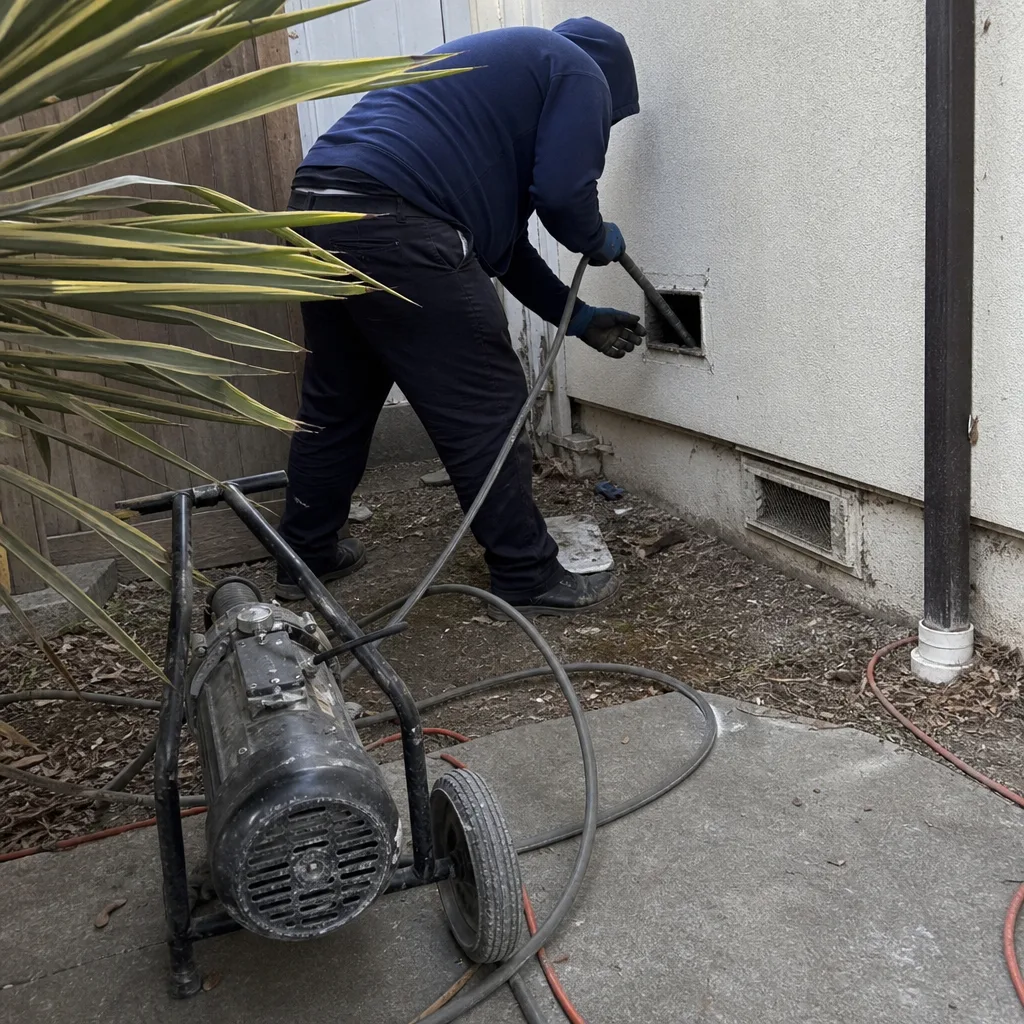 Before
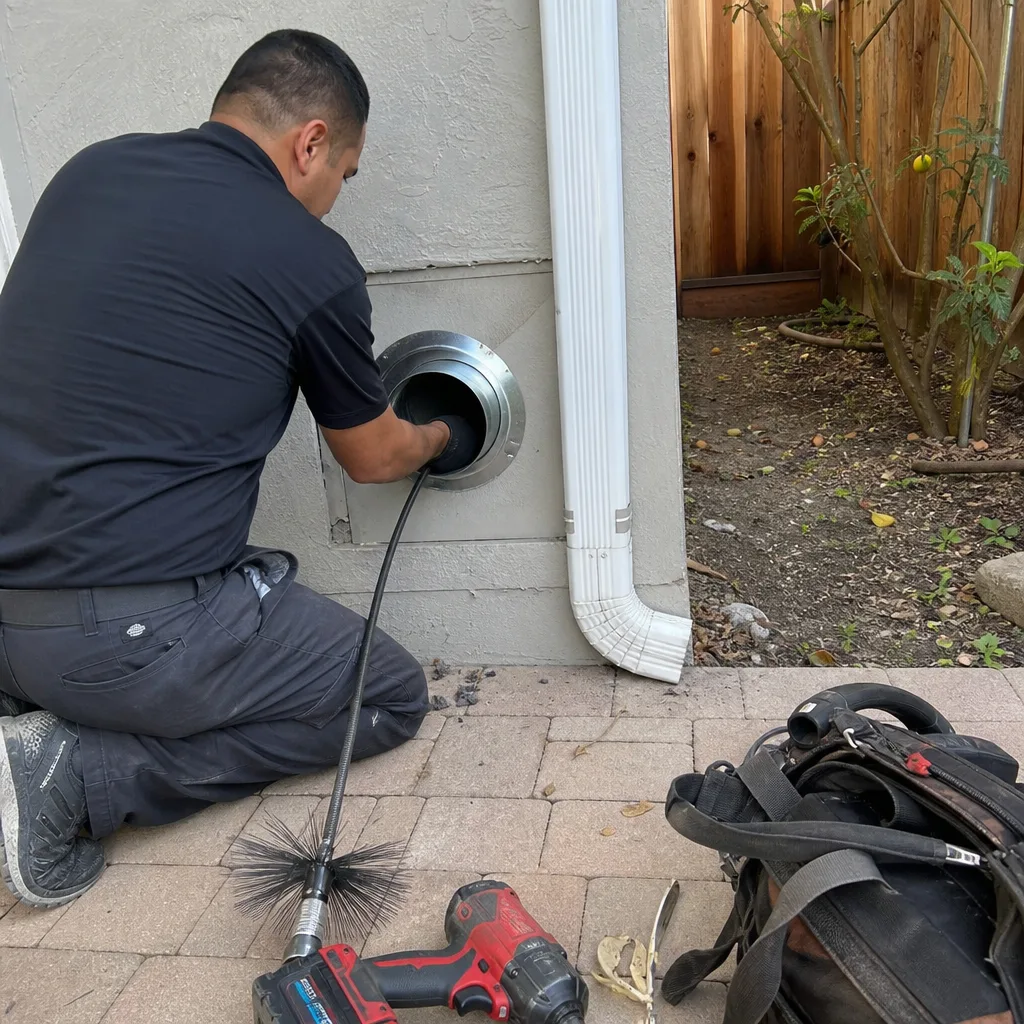 After
After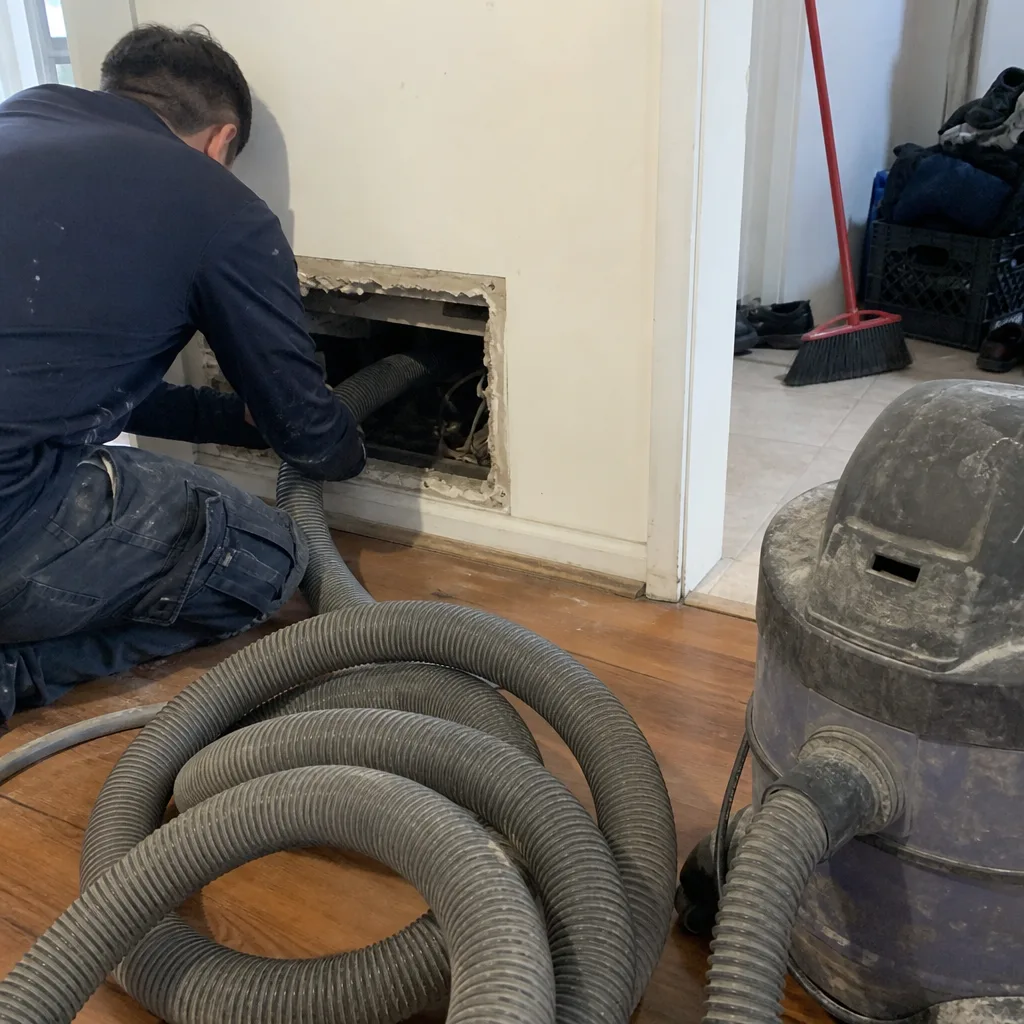 Before
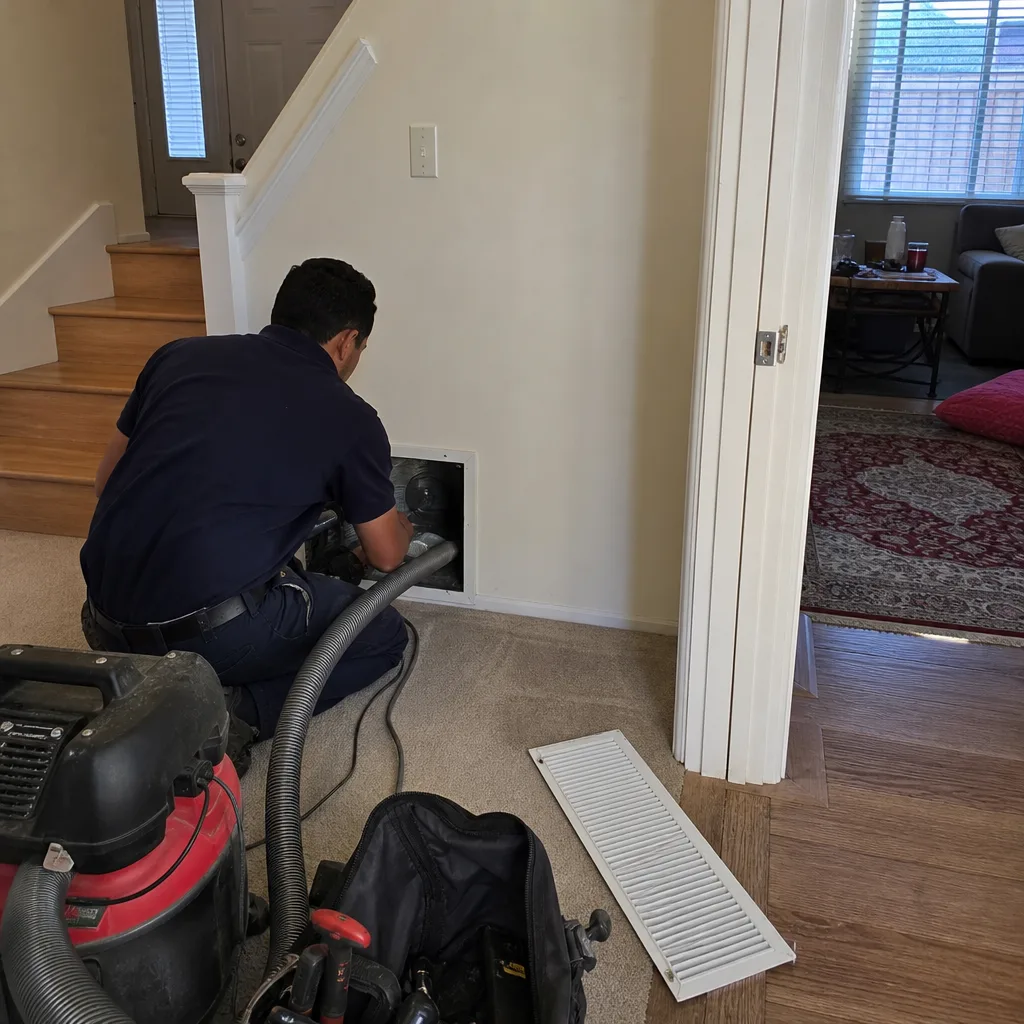 After
After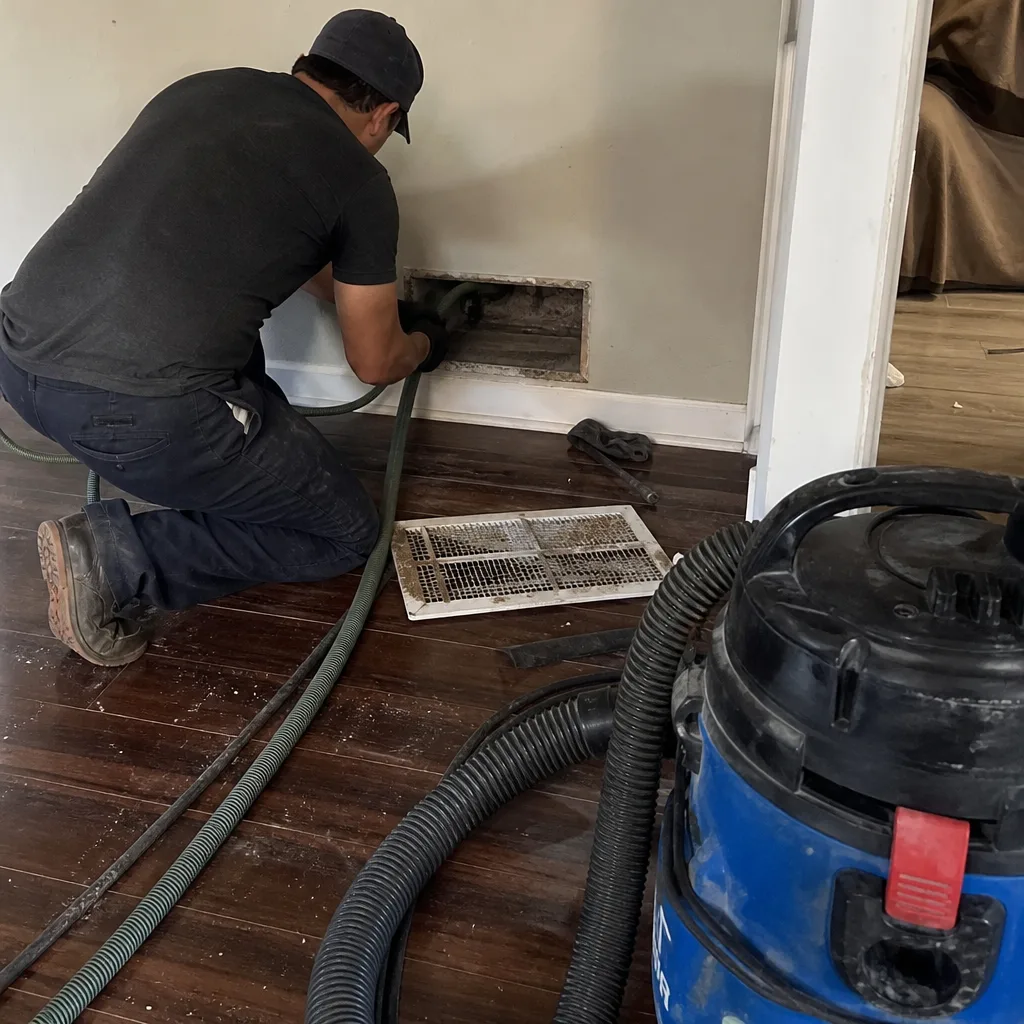 Before
 After
AfterWhen to Call a Professional
Some signs are unambiguous. Visible dust-emitting from registers when the system runs, a persistent musty smell that worsens with the HVAC on, unexplained dust accumulation on surfaces within days of cleaning, worsening allergy symptoms that abate when you leave the house, or a home with unknown maintenance history and a return grille that looks like it’s wearing a sweater. Any of these means the duct run is loaded and a visual inspection is warranted. If you’ve experienced a recent smoke event and haven’t changed filters since, or if you’re within a half-mile of a freeway and can’t remember the last time the system was cleaned, the same applies. Kestrel Air Duct San Jose offers free estimates in San Jose. Call (669) 220-7869 and we’ll give you an honest assessment and a written price, with no obligation and no pressure.
Frequently Asked Questions
For a typical San Jose home more than a half-mile from a freeway, every 3 to 5 years is adequate. Homes within a half-mile of 101, 280, or 87 should plan for every 2 to 3 years. Homes with severe allergy sufferers, multiple pets, or recent wildfire smoke exposure may need earlier intervention. The single most important variable is whether you replaced filters during and after smoke events. A home with disciplined filter maintenance can safely stretch the interval; a home that ran a loaded filter through a Spare the Air week should move the next cleaning up. Call (669) 220-7869 for a free estimate and we’ll help you determine the right interval for your specific home.
Fall cleaning, in late October or November, removes the accumulated particulate load from the entire dry season and the wildfire smoke events that cluster in autumn. Spring cleaning addresses the pollen spike but leaves the system exposed to the highest-particulate months of the year that follow. If you can only clean once, do it in the fall.
Yes, with a qualification. A duct cleaning removes smoke particulate that has settled in the duct run and prevents it from recirculating for months afterward. But no cleaning can undo the need to replace the system filter after a smoke event. The two work together: replace the filter within 72 hours of the alert clearing, then schedule a duct cleaning after the smoke season ends to remove what the filter couldn’t catch.
You should see before-and-after photos or video of the duct interior, taken by the technician during the job. You should receive a written summary of what was found and what was removed. And the price you agreed to should be the price you pay, with no changes at the door. Under the 365-Day Done Right Promise, if the work falls short within the guarantee period, Kestrel returns and makes it right at no charge. That’s in writing on every job.
The $99 coupon is typically an entry price that covers a few supply registers or one duct run, after which the technician explains that the “real” cleaning costs several times more. A legitimate whole-system duct cleaning for a San Jose home runs between $450 and $900, and the price is written before work starts, covering every register, the full return and supply runs, and the blower compartment. If a price seems too low to cover five hours of professional work with professional equipment, it’s not covering it.
No. A shop vac doesn’t generate the negative pressure needed to pull debris from deep within a duct run, and it lacks HEPA filtration, so it releases fine particulate into the living space during the attempt. Professional cleaning uses negative-air extraction equipment, like the Nikro units we run, combined with rotary brush agitation to dislodge debris from the duct wall. Anything less is surface dusting, not cleaning.
The Bottom Line
San Jose’s air quality follows its own logic. Diablo winds and wildfire smoke make autumn the city’s highest-particulate season, not winter. The dry season bakes dust into duct runs and degrades flex duct joints. Freeway proximity accelerates accumulation in predictable, measurable ways. And the single highest-impact maintenance habit, replacing filters within 72 hours of a Spare the Air Day, costs about $20 and takes five minutes. Build your duct care around these facts, clean in the fall when conditions warrant, and you’ll get more from every professional cleaning you schedule. For more guides & resources on San Jose indoor air quality, visit our blog. Or call us at (669) 220-7869 and we’ll walk you through it, in plain English, with a written price before any work begins.
Written by Dale Whitmore, Owner at Kestrel Air Duct San Jose, serving San Jose since 2004.